
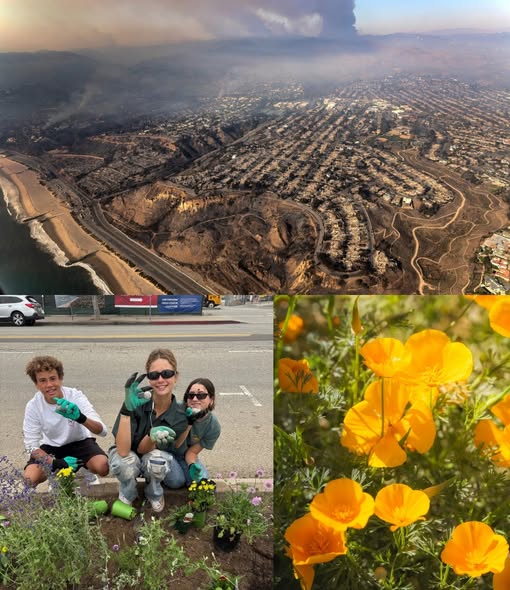
In the aftermath of devastating wildfires that ravaged Los Angeles early last year, a remarkable grassroots movement has emerged, transforming scarred landscapes into blooming havens of native plants and biodiversity. Led by a dedicated mother, her two teenagers, and an inspiring army of volunteers, over 10,000 hand-rolled seed bombs have been scattered across the burn zones of the Palisades and Eaton fires, turning barren ground into vibrant wildflower meadows bursting with poppies, sunflowers, and yarrow.
The fires, which tore through more than 16,000 homes, claimed 28 lives, and displaced hundreds of thousands of residents, were fueled by increasingly extreme climatic conditions. Scientific studies indicate that the intense, hot, and windy conditions that exacerbated the fires are about 35% more likely due to global warming, primarily driven by the burning of fossil fuels releasing greenhouse gases into the atmosphere. The climate crisis not only intensifies the risk of wildfires but also hampers recovery efforts, leaving communities vulnerable to secondary threats.
One of the most shocking revelations following the fires was the discovery of widespread soil contamination. Soil testing across the burn zones uncovered dangerously elevated levels of lead, arsenic, cobalt, and chromium—hazards capable of causing learning disabilities, developmental delays, and even cancer. In some areas, lead levels ranged from 81 to 200 parts per million, raising alarm over community health risks. Despite these findings, the Army Corps of Engineers declined to perform soil testing—a decision that forced families and local groups to seek answers independently, adding a layer of urgency and community resilience to the cleanup process.
Against this backdrop of environmental degradation and governmental inaction, a story of hope and environmental innovation began to unfold. Inspired by the idea of natural remediation, National Geographic writer Dana Goodyear recounts her poignant experience returning to the site of her former home with her family. Together, they hurled handfuls of seed bombs into the barren lot—clumps of native seeds, compost, and clay that could survive harsh conditions and sprout into resilient plants.
The seed bomb project quickly grew beyond individual efforts. Goodyear and her teenage son, Rummy, partnered with schools and community centers to host workshops, empowering neighbors, students, and fire survivors to participate in the healing process. Local businesses donated compost, and seed banks supplied native species well-adapted to the region’s environment. Over time, hundreds of volunteers rolled thousands of seed bombs by hand, fostering an organic movement of ecological restoration.
What makes this initiative even more extraordinary is the discovery that some of the native plants they introduced—such as bush sunflowers—have a natural ability to extract heavy metals like arsenic and lead from contaminated soil. This biological remediation process, known as phytoremediation, is turning these flowers into natural soil cleaners, gradually reducing the toxic burden left behind by the fires.
As spring arrived, the once-barren burn zones erupted into a tapestry of color. The poppies, sunflowers, and yarrow not only created picturesque landscapes but also embodied community resilience and resistance. In a city plagued by climate disasters and neglected by federal cleanup efforts, this grassroots movement exemplifies hope—demonstrating that people working together can heal their neighborhoods, one seed at a time.
This inspiring story underscores a fundamental truth: while billionaires and corporations often dominate the headlines, it is working people and communities who truly turn devastation into renewal. Their efforts remind us that collective action and a little ingenuity can foster not just recovery but also ecological regeneration.
For more on this inspiring story of grassroots innovation and environmental healing, read Dana Goodyear’s full piece in National Geographic.
Where to Learn More
- Planting Hope in Los Angeles Wildfire Zones – National Geographic
- USGS on Phytoremediation Techniques – U.S. Geological Survey
- LA County Department of Public Health
- NOAA Climate Change Resources