
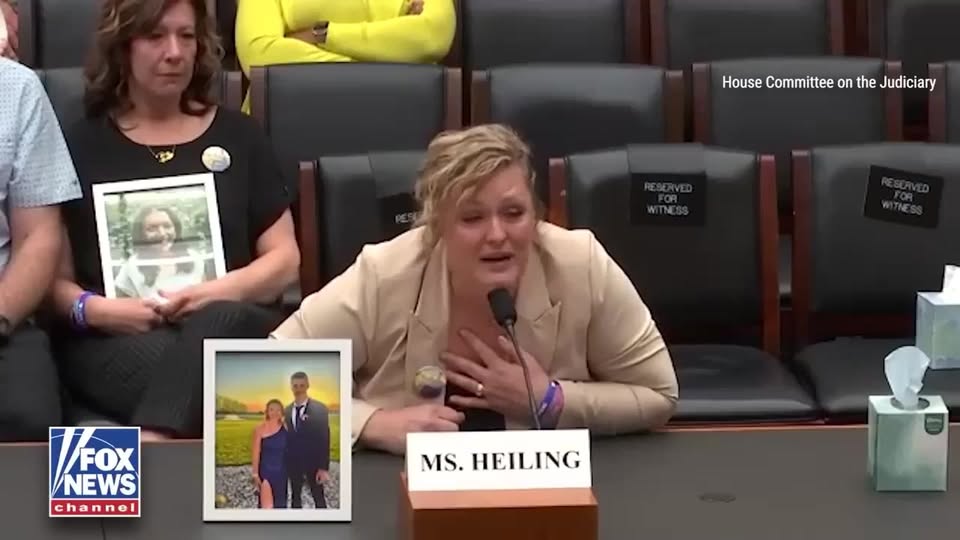
The heartbreaking loss of 18-year-old Brady Heiling has reignited emotional debates over immigration and victim advocacy. Brady, along with his girlfriend, was tragically killed when an alleged drunk-driving illegal immigrant drove the wrong way on the highway, according to authorities. His mother, Jen Heiling, has publicly spoken out against comparisons that seek to equate her family’s loss with other advocacy groups, notably the so-called “Angel Families.”
In recent social media discussions, some have attempted to equate the grief of Brady’s family with the actions or narratives of “Angel Families,” a term used by advocacy groups demanding stricter immigration controls after loved ones were killed by undocumented immigrants. However,Jen Heiling made it clear that such comparisons are misguided and hurtful.
“My son was a bright, kind young man with his whole life ahead of him,” Jen Heiling stated in a powerful statement on social media. “Brady’s death was a tragedy caused by someone who chose to drink and drive. That should never be politicized to serve a narrative that disregards the specific circumstances of his loss.”
She emphasized that her grief is personal and unique, and that her focus is on ensuring justice and honoring Brady’s memory. His death, she added, is not a political tool or talking point, but a devastating loss to her family and community.
The controversy underscores a broader debate in the United States surrounding immigration, victim advocacy, and how grief is exploited in political discourse. Critics of the “Angel Families” movement argue that their narrative sometimes oversimplifies complex issues or uses personal tragedy to push restrictive policies. Conversely, supporters contend that these families have a right to be heard and that tragedies like Brady’s highlight the need for immigration reform.
As the social media hashtags about Brady’s death and the “Angel Families” controversy trend, many are calling for empathy and respectful dialogue. Jen Heiling’s stance reminds us that behind every statistic or political debate, there are real individuals suffering unimaginable loss.
Moving forward, advocacy groups and policymakers are encouraged to approach such sensitive topics with compassion, recognizing the pain of families like the Heilings while fostering constructive conversations about safety and immigration reform.