
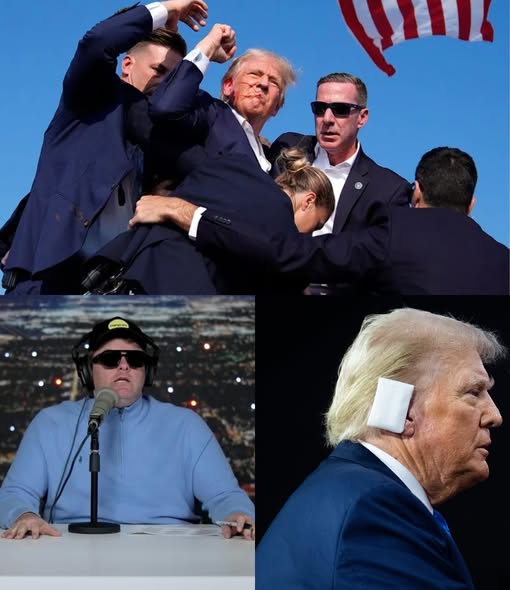
In an unprecedented turn within the loyal ranks of former President Donald Trump, the very supporters who once soaked up his narratives of deep-state plots and false flags are now questioning the legitimacy of key events. A new wave of conspiracy theories is spreading among Trump’s base, with some even calling for him to admit that the recent Butler, Pennsylvania shooting — initially deemed an attempted assassination — was staged.
According to a recent *Wired* article, what was once thought to be a right-wing echo chamber fueled by external critics is now being fueled from within. Prominent conservative voices, including popular podcaster Tim Dillon, have publicly speculated that the shooting might have been orchestrated. Dillon went so far as to suggest that Trump should come clean about staging the incident to rally his supporters: “We staged the assassination attempt in Butler to show people how important it was to vote for me,” Dillon said last weekend. “This was about demonstrating how far I was willing to go for them.”
Within days, the conspiracy ecosystem expanded. On platform X (formerly Twitter), conservative pundit Emerald Robinson accused the FBI of orchestrating the event, asserting: “The FBI *did* it.” Meanwhile, Telegram channels — particularly those aligned with QAnon circles — buzzed with polls and discussions about the event. One prominent supporter, MJ Truth, asked his followers for their opinions, with the overwhelming majority—almost all Trump supporters—believing the shooting was staged and that the truth would remain hidden forever. “The truth will come out 60+ years from now when we’re all dead and nobody really cares anymore,” one follower wrote, echoing a common sentiment reminiscent of decades-old conspiracy theories about JFK’s assassination.
The skepticism doesn’t stop there. Tucker Carlson, a top conservative commentator, has been hinting for months that federal agencies, including the FBI, are engaged in cover-ups, attempting to distort or hide the truth about online activity related to the shooter. Former National Counterterrorism Center director Joe Kent also claimed the investigation was “prematurely shut down”—despite offering no evidence, as critics argue. The message was clear: many within the movement already distrust official narratives, making the question of what really happened in Butler almost secondary.
Darkness deepens as some influential figures now invoke biblical prophecy, openly labeling Trump as *the Antichrist*. They cite his comments comparing himself to Jesus Christ, as well as the AI-generated image he posted of himself healing a man—which he later dismissed as a doctored “doctor” image. This shift from conspiratorial admiration to outright condemnation signals a troubling transformation within the movement, where the paranoia has become a tool for attacking even their own leader.
Much of this distrust has been engineered, critics say. Trump’s longstanding strategy of promoting distrust in institutions—media, government, even the justice system—has now boomeranged. The base, long conditioned to reject evidence and embrace suspicion, is applying the same paranoid logic to him. As gas prices soar, international conflicts persist, and allies abandon him, those who once believed in Trump’s narrative are increasingly questioning his integrity.
Tragedies like the death of Corey Comperatore, a retired fire chief shot shielding his family, reinforce that reality. Despite the FBI investigating the event as a genuine assassination attempt—witnessed by hundreds and captured on camera—the conspiracy-minded dismiss it entirely, asserting that they’ve been taught to reject concrete evidence. The result? A movement that built its foundation on mistrust now finds itself questioning the very figure it once blindly followed.