
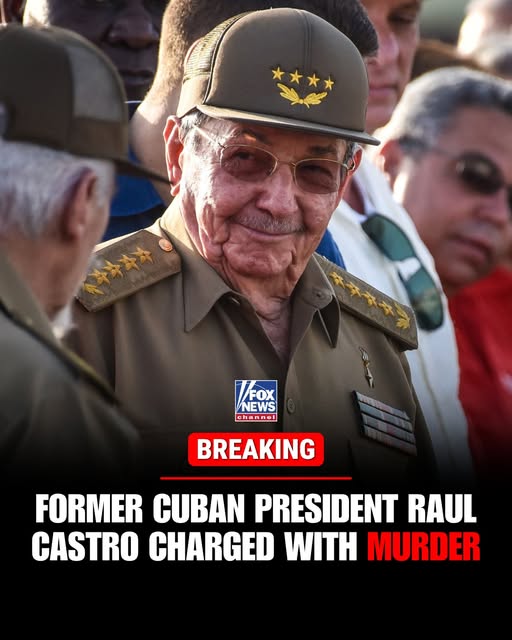
In a stunning development that has sent shockwaves through international diplomatic circles, the Department of Justice has formally indicted former Cuban President Raul Castro on charges of murder and conspiracy related to the 1996 shootdown of civilian humanitarian flights operated by Brothers to the Rescue. This marks a rare instance of U.S. legal action targeting Cuba’s highest political echelon for actions taken decades ago.
The incident in question occurred over international waters in 1996, when Cuban fighter jets downed two civilian aircraft, killing all four onboard. The flights, which aimed to monitor and promote the safety of Cuban exiles and advocate for human rights, became a flashpoint in Cold War-era tensions. The attack sparked immediate international outrage, with condemnation coming from numerous countries and human rights organizations worldwide.
Until now, accountability for the tragedy had been limited. Only one lower-level Cuban official had been convicted in the United States, and the Cuban government largely dismissed allegations, labeling the incident a regrettable but justified act of defense against unauthorized “intrusions.” However, recent declassified documents, along with interviews from former U.S. officials and witnesses, suggest that higher-ranking officials, including Raul Castro, may have been complicit or directly involved in the decision to shoot down the aircraft.
The indictment comes after years of painstaking research and investigation by U.S. prosecutors, who say they now possess credible evidence linking Raul Castro to the incident. The move signals an unprecedented effort by the United States to hold Cuba’s leadership accountable for actions that led to loss of civilian life. It also opens a new chapter in the long-standing diplomatic tension between the two nations.
Legal experts note that indicting a former head of state is a complex and rare decision, often fraught with political implications. Nevertheless, U.S. authorities argue that justice must be served for the victims and their families, and that such actions underscore the importance of accountability, even decades after the fact.
The Cuban government has yet to respond publicly to the charges. Historically, Havana has dismissed accusations of involvement, insisting that the shootdown was a misguided act of self-preservation. The indictment could potentially strain diplomatic relations further, but analysts suggest it may also pave the way for renewed dialogue focused on human rights and rule of law.
This case has reignited discussions about justice for Cold War-era atrocities and the extent to which past political actions can be held accountable in modern courts. As legal proceedings unfold, victims’ families and human rights advocates are hopeful that this marks a step toward long-overdue accountability and acknowledgment of the tragic events in 1996.
Where to Learn More
- NY Times: U.S. Indicts Raul Castro Over 1996 Shootdown – The New York Times
- Washington Post: Historic Indictment Targets Former Cuban Leader – The Washington Post
- Reuters: The 1996 Shootdown and Its Long-Lasting Legacy – Reuters
- BBC: Cuba Responds to U.S. Indictment of Raul Castro – BBC News