
In a country grappling with an increasing frequency and intensity of climate change-driven extreme temperature events, a significant shift in energy policy is urgently needed. As Americans face unprecedented heatwaves and relentless cold snaps, a growing consensus emerges: reliance on fossil fuels such as natural gas and coal is no longer viable. Experts warn that these energy sources are not only vulnerable but also inadequate in meeting the nation’s future energy demands during extreme weather conditions.
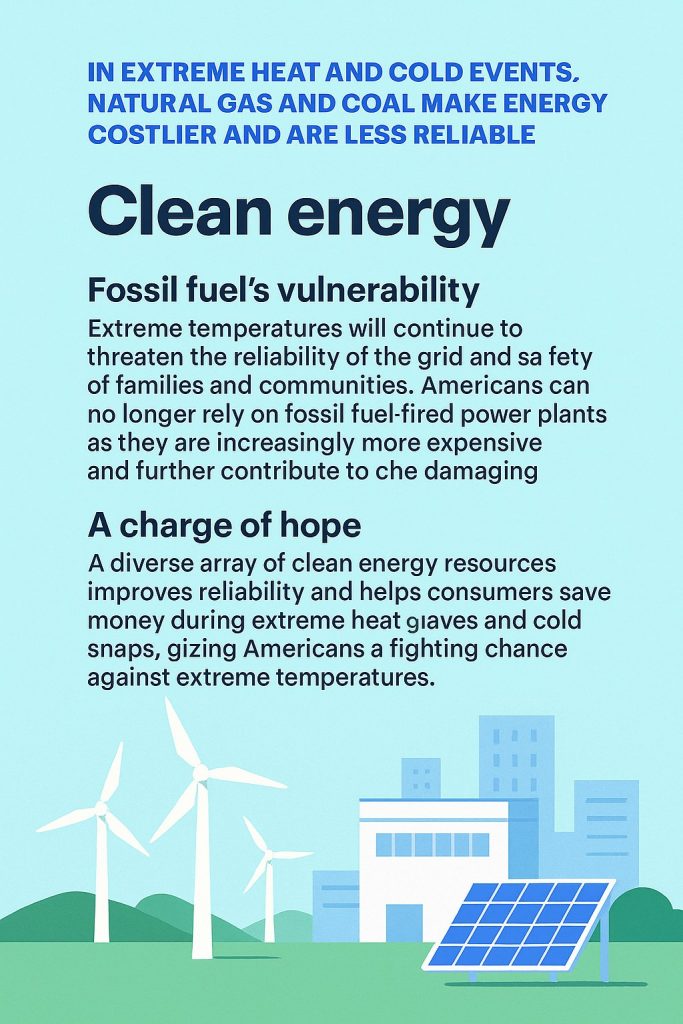
A recent report from the Center for American Progress highlights the essential role that clean energy must play in safeguarding power reliability across the United States. The graphic accompanying the report presents a stark visualization of the future: a light blue backdrop illustrating a vibrant cityscape adorned with wind turbines and solar panels, symbolizing resilience in the face of climate extremes.
As the global climate crisis intensifies, America’s energy infrastructure must adapt to the unpredictable rhythms of nature. Traditional power sources, which often falter during extreme weather events, leave millions vulnerable to blackouts. For instance, during scorching heatwaves, natural gas plants may struggle due to heightened demand while simultaneously facing operational challenges, leading to a potential grid failure. Similarly, the frigid depths of winter can hinder coal and gas operations, rendering them inefficient and unreliable.
“The evidence is clear: our older, fossil-fuel-dependent systems are not equipped to handle the storm of climate change that is already upon us,” says Dr. Sylvia Roberts, an environmental scientist and energy policy advocate. “To prevent widespread blackouts and ensure reliability, investing in renewable energy is not just beneficial—it’s essential.”
Renewables such as wind and solar energy, which generate power consistently despite the whims of extreme weather, offer a resilient solution. Unlike fossil fuels, these clean energy sources are inherently adaptable. They can be deployed in diverse geographic locations, often achieving high efficiency even during adverse weather conditions.
Additionally, transitioning to a clean energy infrastructure could yield significant economic advantages. Innovative technologies and green jobs in solar and wind energy fabrication present opportunities for communities nationwide to thrive in an era that prioritizes sustainability. Emerging technologies, including energy storage systems, also contribute to this transition by allowing for the capture and use of renewable energy even when production is low.
However, the transition won’t come without challenges. Policymakers at federal, state, and local levels must work hand in hand to improve grid infrastructure and incentivize renewable energy investments. The road to a sustainable energy future will demand collaboration across sectors, all geared toward the common goal of eliminating reliance on fossil fuels that exacerbate climate impacts.
In light of increasing public awareness and advocacy for climate action, momentum is building to propel policy changes that favor clean energy solutions. The path ahead is undoubtedly complex, but one thing is clear: to preserve the integrity of our power supply in the face of climate change, embracing clean energy is not just an option—it is a necessity.
Where to Learn More
- Clean Energy is Essential to Preventing Blackouts During Dangerous Extreme Heat and Cold – Center for American Progress
- Clean Energy Solutions to the Climate Change Crisis – NRDC
- The Clean Energy Future: What’s Next? – U.S. Department of Energy
- Renewables: A Key Component of the Energy Transition – World Resources Institute