
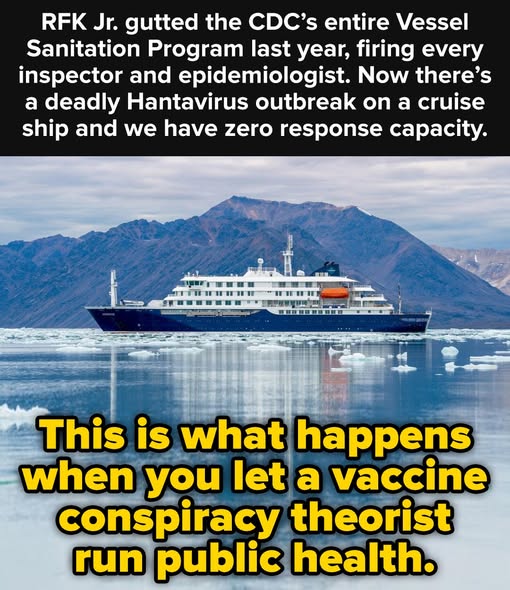
The recent surge of a deadly Hantavirus outbreak aboard a cruise ship has ignited concerns over public health practices and regulatory oversight, with many pointing fingers at a controversial decision by former officials. Social media has been buzzing with claims that RFK Jr., in a move that has raised alarm among health experts, dismantled vital sanitation programs leading to the current crisis.
According to viral posts circulating widely online, last year RFK Jr. gutted the CDC’s Vessel Sanitation Program, firing every inspector and epidemiologist involved in monitoring health risks on passenger ships. The posts include an image with the stark message: “RFK Jr. gutted the CDC’s entire Vessel Sanitation Program last year, firing every inspector and epidemiologist.” Critics argue that this drastic reduction in oversight is a primary factor behind the recent Hantavirus outbreak, which reportedly has caused multiple illnesses and fatalities among cruise ship passengers and crew.
The Role of the Vessel Sanitation Program
The CDC’s Vessel Sanitation Program has historically been instrumental in ensuring sanitation standards aboard cruise ships, preventing the spread of infectious diseases. Its inspectors conduct routine inspections, assess cleanliness, and monitor for potential health hazards like rodents, which are known carriers of hantavirus. The program’s shutdown or severe cutbacks could leave ships vulnerable to outbreaks, health experts warn.
Hantavirus itself is a serious respiratory disease transmitted primarily through contact with infected rodents or their droppings. Cabin infestations amid poor sanitation conditions can facilitate transmission among passengers and crew, especially on ships where hygiene protocols are compromised.
In the current scenario, health officials confirm that multiple cases of hantavirus have been identified on a cruise ship sailing in the Atlantic, with some passengers requiring hospitalization. Tragically, reports suggest at least one death has been linked to the outbreak, raising urgent questions about how such an event could have unfolded so rapidly.
Many public health advocates argue that the decision to dismiss all vessel inspectors and epidemiologists essentially dismantled a key safety infrastructure. Without proper oversight, outdated sanitation measures may have persisted, allowing rodents and their associated pathogens to flourish in ship environments. Critics contend that this policy shift has had dire consequences, exposing passengers to preventable health threats.
Supporters of the cuts argue that financial considerations and deregulation aimed to boost the cruise industry’s economic growth. However, experts emphasize that investing in sanitation and disease prevention is crucial—particularly amid global health challenges—to safeguard both travelers and maritime laborers.
As investigations continue, questions are mounting about accountability and the future of health safety onboard cruise ships. The incident acts as a stark reminder of the importance of maintaining rigorous health standards and the risks of neglecting essential public health programs.
Where to Learn More
- CDC Vessel Sanitation Program Overview – Centers for Disease Control and Prevention
- Hantavirus Outbreak on Cruise Ship Spurs Health Alert – National Geographic
- World Health Organization: Hantavirus Facts
- NBC News: Deadly Outbreak Highlights Cruise Ship Sanitation Failures