
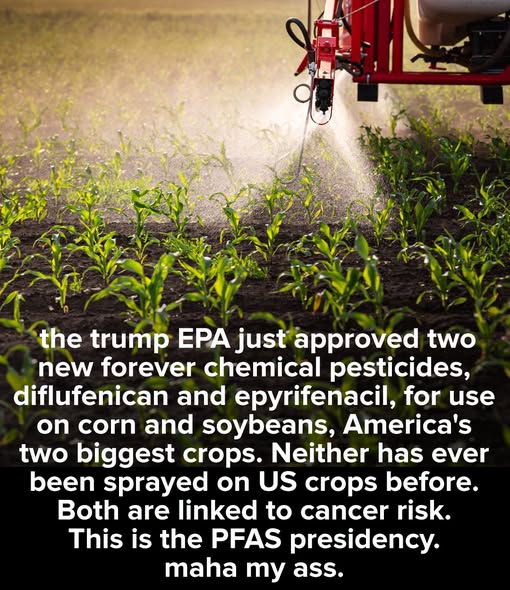
In a move that has ignited widespread debate among environmentalists, farmers, and public health advocates, the Environmental Protection Agency (EPA) has recently approved the use of two new pesticides containing persistent chemicals—diflufenican and epyrifenacil—applied to the nation’s two most cultivated crops: corn and soybeans. The decision raises serious concerns given the nature of these chemicals, often categorized as “forever chemicals” due to their environmental persistence and potential health risks.
The approval was announced amidst ongoing discussions about the safety and regulation of pesticides, especially those associated with long-lasting environmental impacts. Diflufenican and epyrifenacil are both herbicides designed to control weeds, but recent evidence suggests that these chemicals contain components classified as persistent organic pollutants (POPs). These substances do not break down easily in soil or water, accumulating over time and potentially entering the food chain.
The decision has sparked alarm among watchdog groups and researchers who warn that such chemicals could have detrimental effects on wildlife, water sources, and human health. “The approval of pesticides with such persistent chemicals on our primary food sources is highly concerning,” said Dr. Lisa Green, an environmental toxicologist. “These substances have a notorious reputation for lingering in ecosystems and potentially causing chronic health issues.”
Critics argue that the EPA’s decision may have been influenced by industry lobbying and economic considerations, with little regard for the long-term ecological and health consequences. “We need to prioritize safer, sustainable pest management practices rather than rushing to approve chemicals known for their environmental persistence,” said a spokesperson from the Environmental Working Group.
Farmers, on the other hand, are caught in a difficult position. Many rely on these chemical tools to protect their crops from invasive weeds, which can significantly reduce yields and impact income. The EPA maintains that the pesticides meet safety standards based on current scientific data, but independent experts are questioning whether these evaluations adequately account for the chemicals’ longevity and cumulative effects.
The approval also raises questions about regulatory transparency and whether sufficient public and scientific input was considered before the decision was finalized. As more details emerge, communities near agricultural areas are expressing concern about potential contamination of water supplies and soil health.
This development adds to the ongoing global conversation about the use of chemicals in agriculture and highlights the urgent need for policies that balance production needs with environmental and health safety. As calls for stricter pesticide regulations grow louder, consumers and advocacy groups are urging for increased scrutiny and the adoption of organic and sustainable farming practices.
Where to Learn More
- EPA Pesticide Program – Environmental Protection Agency
- Environmental Working Group
- Natural Resources Defense Council
- ScienceDaily: Pesticide Impact on Ecosystems
- Reuters Environment News