
In today’s political landscape, the influence of dark money—funds from undisclosed sources—continues to loom large over U.S. elections. These hidden financial contributions give corporations and special interests the ability to sway public policy and threaten public servants with unlimited spending, often without transparency or accountability.
Experts warn that this unchecked flow of dark money undermines the very foundation of democracy, allowing powerful entities to wield disproportionate influence behind closed doors. Corporations can threaten elected officials and candidates with expensive campaigns or legal pressures, leveraging the threat of financial ruin to sway decisions that affect millions of Americans.
Enter the Corporate Power Reset, a proposed initiative aimed at dismantling this corrosive power. The movement seeks to implement reforms that limit the influence of dark money and restrict corporations from exerting undue pressure on public officials. The goal is to restore transparency and ensure that elections represent the will of the people—not the narrow interests of powerful corporations.
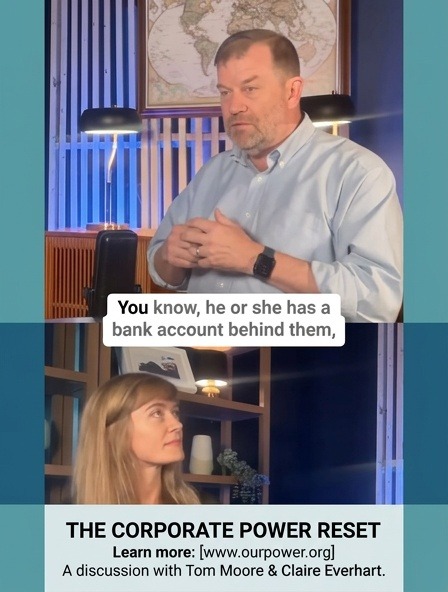
Tom Moore recently sat down with Claire Everhart in a compelling discussion that dives deep into how the Corporate Power Reset could revolutionize the way campaigns are funded and how politicians interact with corporate giants. According to Everhart, the reset is designed to “remove the leverage corporations hold over our democracy, ensuring more equitable and transparent elections.”
One key component of the proposal is requiring greater transparency for political donations, making all sources of campaign funding publicly accessible. This move aims to diminish the shadowy influence of secret political spending that often goes unchallenged in today’s political arena.
Additionally, the initiative aims to ban corporate donations directly influencing elections, restrict unlimited independent expenditures, and set legal boundaries on the kinds of financial threats corporations can make against public officials. These reforms neutralize the capacity for dark money to distort electoral outcomes and serve as a check on corporate power.
The discussion emphasizes that the Corporate Power Reset isn’t just about campaign finance—it’s about safeguarding the core principles of democratic participation and ensuring that elected officials prioritize the interests of their constituents over corporate agendas.
As the debate heats up, advocates for reform argue that this reset is crucial for restoring trust in government and promoting a more equitable political landscape. Critics, however, caution about potential legal challenges and the need for robust enforcement. Regardless, the push for change highlights a growing awareness that the future of American democracy depends on tackling the dark money menace head-on.
Where to Learn More
- Campaign Finance Reform and the Fight Against Dark Money – The Center for Responsive Politics
- Corporate Influence and Elections: What You Need to Know – The Brennan Center for Justice
- The Corporate Power Reset: A New Approach to Democracy – Progressive Policy Institute
- Tom Moore’s Interview with Claire Everhart on Ending Dark Money’s Hold – Democracy Now