
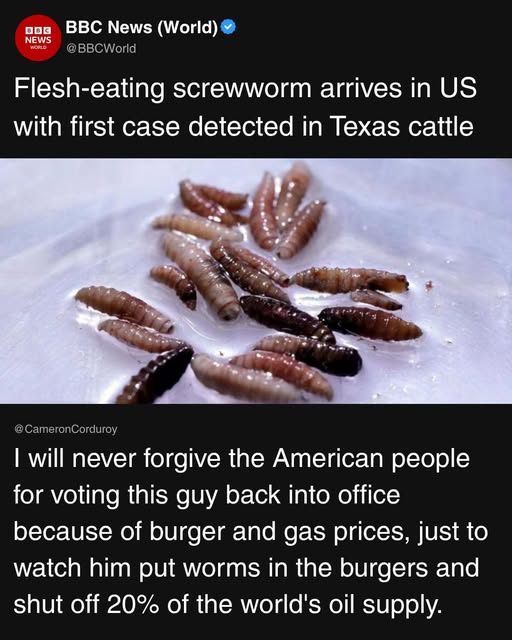
An alarming development has emerged from Texas, where the first case of flesh-eating screwworm inflicted on U.S. cattle has been officially confirmed. The news, which has quickly spread across social media platforms, raises serious concerns about the potential threat to livestock health and the broader agricultural economy.
The case was identified in Cameron County, Texas, marking a significant departure from previous regional outbreaks primarily confined to parts of Central and South America. According to local authorities, the infected cattle exhibited severe tissue destruction caused by the screwworm, a parasitic fly (Cochliomyia hominivorax), notorious for its larvae that feed on living flesh. This species was eradicated from the United States in the mid-20th century through extensive sterile insect technique programs but appears to be making a concerning return.
The first reports surfaced on social media, with users sharing striking images and alarming updates about the affected cattle. One viral post highlighted a message reading, “Flesh-eating screwworm arrives in the U.S. with first case detected in Texas cattle.” The message quickly gained traction, prompting reactions from farmers, veterinarians, and concerned citizens alike.
Veterinary experts warn that the presence of screwworms can pose serious health risks to livestock, leading to enormous financial losses if outbreaks are not contained promptly. The USDA and state agricultural officials have launched investigations and increased monitoring efforts. Authorities reaffirm that the main vectors for screwworms are wounds or open sores in animals, which can then become infested with larvae, leading to rapid tissue destruction if untreated.
Historically, the eradication of screwworms in the U.S. was a major success, largely thanks to sterile insect release programs implemented in the 1950s and 1960s. However, experts now emphasize the importance of vigilance, especially in the context of changing climate patterns and increased movement of livestock, which could facilitate the re-establishment of screwworm populations.
Many are questioning how the screwworm has managed to breach U.S. borders once again. While some speculate that warmer temperatures may be extending the fly’s habitat, others point to potential gaps in biosecurity and livestock management. The ongoing concern is that if the infestation spreads beyond Texas, it could threaten other states’ herds and complicate eradication efforts.
For now, farmers are urged to inspect their animals closely, maintain proper wound hygiene, and report any suspicious cases to veterinary authorities. The situation remains fluid, with officials working tirelessly to prevent further outbreaks and protect the nation’s animal industries.
This story has resonated widely on social media, stirring fears about a possible resurgence of an eradicated pest—and emphasizing the importance of robust biosecurity measures in safeguarding agricultural stability.