
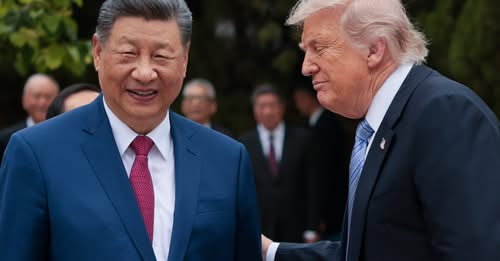
In a move that has sent shockwaves across the Indo-Pacific region, the Trump administration has announced the suspension of a critical $14 billion arms package to Taiwan. This decision marks a significant departure from longstanding U.S. commitments and has ignited fears of escalating tensions with Beijing.
The proposed arms package, which included advanced missile systems, defense vehicles, and other military equipment, was seen by many analysts as essential for Taiwan’s self-defense amidst China’s increasing assertiveness in the region. By freezing the shipment, the administration appears to be prioritizing diplomatic caution, but critics argue that it undermines Taiwan’s security and the broader U.S. strategy of deterrence in the Indo-Pacific.
Experts warn that this move could damage decades-old US commitments to Taiwan’s defense, potentially emboldening China to accelerate its military expansion and aggressive stance in the Taiwan Strait. “This is a dangerous reversal,” said Dr. Lisa Chen, a regional security analyst at the Asia Policy Institute. “U.S. credibility is at stake, and Beijing could interpret this pause as a sign of wavering support, which could invite further provocations.”
Since the Taiwan Relations Act was passed in 1979, the U.S. has maintained a policy of strategic ambiguity, providing defensive assistance to Taiwan without formal diplomatic recognition of sovereignty. The recent freeze, however, appears to be a shift away from even these nuanced commitments, raising concerns among allies and policymakers about future U.S. engagement.
In Beijing’s eyes, the halt is viewed as a concession to pressure from China, which has long demanded that the U.S. cease arms sales to Taiwan. Chinese officials have strongly condemned the suspension, warning of possible retaliatory measures. The Chinese government’s official statement emphasized that “assisting Taiwan in military ways is interference in China’s internal affairs” and warned that such actions undermine regional stability.
The move also risks encouraging aggressive posturing by Beijing, which has not shied away from issuing military warnings and conducting provocative exercises near Taiwan. U.S. allies in the region, particularly Japan and South Korea, rely on American security guarantees; any erosion of support for Taiwan could signal broader vulnerabilities for regional stability.
Some argue the freeze may be a tactical move by the Trump administration to leverage negotiations or appease political factions wary of provoking China. However, critics contend that in the long run, it could diminish U.S. influence and strategic advantage in Asia, where maintaining a robust deterrence framework is essential.
As tensions mount, stakeholders across the Indo-Pacific are watching closely. The Biden administration faces increasing pressure to clarify Washington’s commitment to Taiwan and to restore robust support for its security, countering accusations of abandonment and ensuring stability in a volatile region.