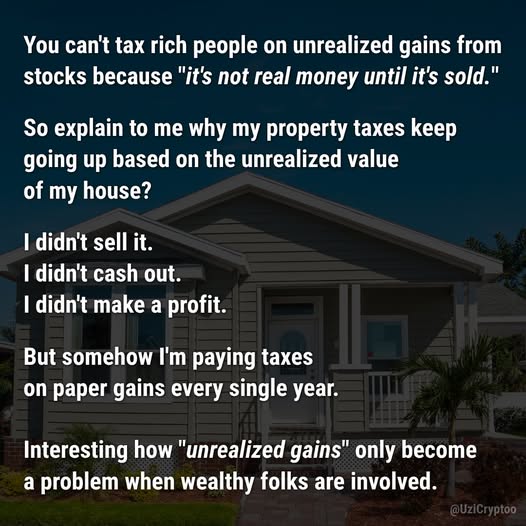
In an era where economic inequality is a major concern, a growing debate is highlighting an intriguing inconsistency in our tax system. A viral social media post sarcastically questions why *rich people are not taxed on unrealized gains from stocks*, yet homeowners continue to see their property taxes rise year after year.
The crux of the issue lies in how different types of wealth are taxed and the perceptions surrounding “real” versus “unrealized” gains. Many investors see significant increases in their stock portfolios, but these gains remain untaxed until they’re sold and realized as cash. This has led critics to argue that the current system favors the wealthy, as their wealth can balloon without immediate tax implications.
However, when it comes to property owners, the story is different. Property taxes are based on assessed property values, which are updated regularly through local assessments. As real estate markets heat up, local governments often raise property assessments, leading to higher taxes—even if the homeowner hasn’t sold or cashed out their property.
This discrepancy fuels public frustration: While stock market gains are tax-deferrable until liquidation, rising property values immediately increase a homeowner’s tax burden. Critics ask, “If the wealthy can see their wealth grow tax-deferred on paper, why are ordinary homeowners facing higher taxes based on market appraisals?”
This debate taps into broader concerns about fairness and the structure of the tax system. Some argue that taxing unrealized gains—particularly on stocks—could help fund public services or reduce deficits, but opposition remains strong due to legal, logistical, and political hurdles.
Meanwhile, property taxes are a critical revenue source for local governments, funding schools, infrastructure, and public safety. These taxes are often determined by assessed property values, which tend to increase with rising real estate markets. Unfortunately for homeowners, this can mean higher bills even if they do not see any liquidity or cash from these increased valuations.
The social media post humorously highlights this double standard, sparking a broader conversation about tax fairness, economic inequality, and whether reforms are necessary for a more equitable system. Critics contend that the current approach benefits those with significant stock portfolios while burdening middle and working-class homeowners.
Advocates for reform suggest reforms like implementing taxes on unrealized gains for certain assets, or reassessing how property taxes are calculated to prevent sudden spikes. However, such measures face legal challenges and political resistance, as many stakeholders resist changes that could impact their financial interests.
For now, the disparity remains a contentious topic that continues to fuel debates about fairness and the future of tax policy. As economic disparities grow, and as social media amplifies these issues, the conversation about how best to tax wealth—realized or not—becomes more urgent than ever.