
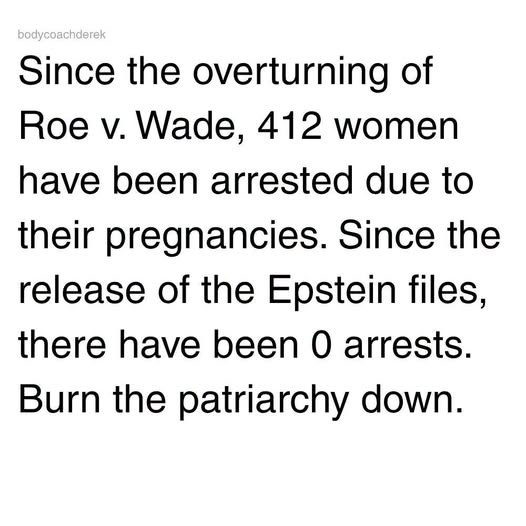
The recent social media post highlighting a striking disparity has ignited a nationwide conversation about reproductive rights, legal enforcement, and justice. The post, attributed to bodycoachderek, claims that since the Supreme Court’s decision to overturn Roe v. Wade, approximately 412 women have been arrested due to their pregnancies. In stark contrast, since the release of the controversial Jeffrey Epstein files, there have been zero arrests.
The data suggests a shocking escalation in legal actions against pregnant women in the wake of Roe’s reversal. While the specifics of these arrests remain complex and vary by jurisdiction, the number indicates a potentially alarming trend of increased criminalization of pregnancy and reproductive health decisions.
Since the landmark 1973 decision that federally protected abortion rights, many states have relied on federal protections to safeguard reproductive freedoms. However, the Supreme Court’s decision in June 2022 to overturn Roe v. Wade has led to nearly half the country moving to restrict or ban abortion outright, prompting a surge in legal actions and law enforcement interventions targeting women, sometimes even before they seek abortion services.
The social media post draws a stark comparison to the Epstein case, where decades of investigations into the disgraced financier’s illicit activities resulted in multiple charges but, according to the post, no arrests or consequences following the release of the Epstein files. This contrast is being used to question priorities in law enforcement — with some critics arguing that the system is more aggressive toward women facing reproductive dilemmas than it is towards alleged sex traffickers or other high-profile figures.
Legal experts warn that these arrests reflect a burgeoning trend of criminalizing pregnancy-related behaviors, which could include seeking abortions, self-managing pregnancy, or even just being labeled as at-risk mothers under certain state laws. Human rights organizations worldwide have raised concerns that such policies could violate women’s rights and pose serious health risks.
Furthermore, the disparity in response to high-profile cases like Epstein versus the incarceration of women facing pregnancy-related issues raises questions about systemic priorities. Critics are calling for more transparency and accountability from law enforcement agencies and policymakers, urging the public to stay informed and advocate for reproductive rights and justice.
As this issue continues to unfold, experts recommend staying connected with reputable news outlets and advocacy organizations that monitor reproductive rights and criminal justice reforms across the country.
Where to Learn More
- Human Rights Watch: Women’s Rights Under Threat – Human Rights Watch
- American Civil Liberties Union: Reproductive Freedom & Justice – ACLU
- New York Times: The Aftermath of Roe v. Wade Overturning
- ProPublica: Arrests and Pregnancy Criminalization
- The Brennan Center for Justice: Criminal Justice Reform