
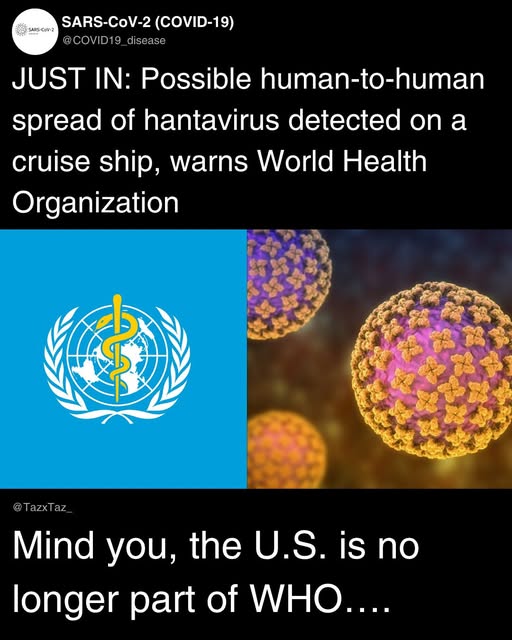
In a startling development, the World Health Organization (WHO) has issued a warning following reports of a potential human-to-human transmission of hantavirus aboard a cruise ship. The revelation has sent ripples through public health circles and raised concerns among travelers and maritime health authorities worldwide.
The incident came to light after several passengers and crew members aboard the cruise experienced symptoms consistent with hantavirus infection. Typically associated with rodent exposure, hantaviruses are known to cause severe respiratory and renal illnesses, often transmitted through contact with contaminated rodent droppings, urine, or saliva. However, recent findings suggest a more alarming possibility—that the virus may now transmit directly from person to person under certain conditions.
The outbreak was initially identified when a handful of passengers reported flu-like symptoms, including fever, muscle aches, and shortness of breath, within days of the voyage. Laboratory testing confirmed hantavirus infection in multiple individuals, prompting rapid investigation by onboard medical teams and global health authorities.
While hantavirus transmissions have traditionally been linked to rodent infestations and environmental exposure, this incident marks a significant deviation from established understanding. The WHO has noted that, although rare, human-to-human transmission can occur, primarily through contact with respiratory secretions during close contact with infected individuals. The recent cases suggest that the virus may be capable of spreading via respiratory droplets onboard the confined environment of a cruise ship.
“This is an evolving situation,” said Dr. Maria Santos, a WHO epidemiologist. “While we are still investigating the extent of the human-to-human transmission, the possibility raises serious concerns about onboard quarantine protocols and the need for heightened vigilance.”
Maritime health authorities have responded promptly, implementing quarantine measures and isolating affected individuals. Passengers are being advised to monitor symptoms closely, practice rigorous hygiene, and avoid close contact with others if symptoms develop. The cruise has been temporarily halted, and affected individuals are receiving specialized medical treatment.
The incident underscores the importance of rapid response and adaptive public health strategies in managing emerging infectious diseases, particularly in enclosed settings like cruise ships where transmission risks multiply. The WHO continues to investigate the outbreak and coordinate with national health agencies to contain and understand the virus’s behavior.
Health experts warn that, although hantavirus infections remain relatively rare globally, this development highlights the need for increased awareness and preparedness—especially as travel and global mobility continue to rise. More research is needed to understand the potential for human-to-human transmission fully and to develop effective prevention measures.
For travelers and the general public, the key takeaway is to remain vigilant about hygiene practices, report any symptoms promptly, and stay informed through official health advisories.
Where to Learn More
- WHO Provides Update on Hantavirus Outbreak aboard Cruise Ship – World Health Organization
- Recent Hantavirus Outbreaks and Transmission Risks – Centers for Disease Control and Prevention
- Research Advances in Hantavirus Transmission and Prevention – National Institutes of Health