
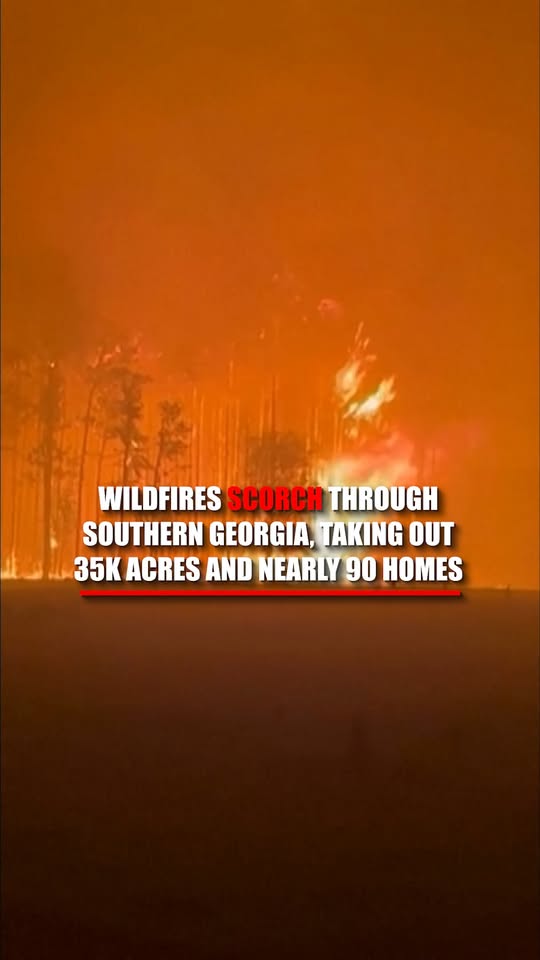
In a harrowing display of nature’s fury, wildfires continue to ravage southern Georgia, scorching more than 35,000 acres of land and leaving a trail of destruction that has displaced dozens of families. The relentless blaze has already destroyed nearly 90 homes, with residents and firefighters alike witnessing the devastating impact of a record-breaking drought that has left the region dangerously dry and highly susceptible to wildfires.
The fires, which ignited earlier this week, are fueled by unprecedented drought conditions that have dried out forests, grasslands, and brush, creating an environment primed for rapid spread. According to local authorities, the combination of dry winds and low humidity has impeded firefighting efforts, causing the flames to continue encroaching on communities across southeastern Georgia.
Videos circulating on social media capture the intense scene: towering sheets of smoke billow into the sky as flames lick the treetops and rooftops. Residents are seen evacuating in panic, some with only minutes to gather their belongings before the fire approaches.
The smoke from these wildfires has not only obscured the skies but has also triggered Air Quality Alerts in the region, posing health risks for residents, especially those with respiratory issues. The dry, gusty winds continue to hamper firefighting operations, spreading the fires faster and making containment efforts increasingly difficult.
Authorities have called for increased caution, urging residents in affected areas to stay alert and heed evacuation orders. Emergency crews from neighboring states have been mobilized to assist local firefighting teams, who are battling the flames in challenging conditions without significant rain relief on the horizon.
Environmental experts warn that the situation underscores the growing threat posed by climate change and persistent droughts, which have become more severe in recent years. As the region faces ongoing dryness and heatwaves, experts warn that such wildfire events could become more frequent and intense in the future unless preventive measures are taken.
Local officials are working to mitigate the damage, providing assistance to displaced families and assessing the full extent of the destruction. Meanwhile, residents are left to grapple with the trauma of losing their homes and the uncertainty of how long recovery will take.
As the wildfires continue to burn across southeastern Georgia, the community’s resilience and the dedication of firefighting crews remain evident amid the chaos. The hope now lies in containing the flames before further destruction occurs and addressing the broader issues of climate resilience and drought management in the region.