
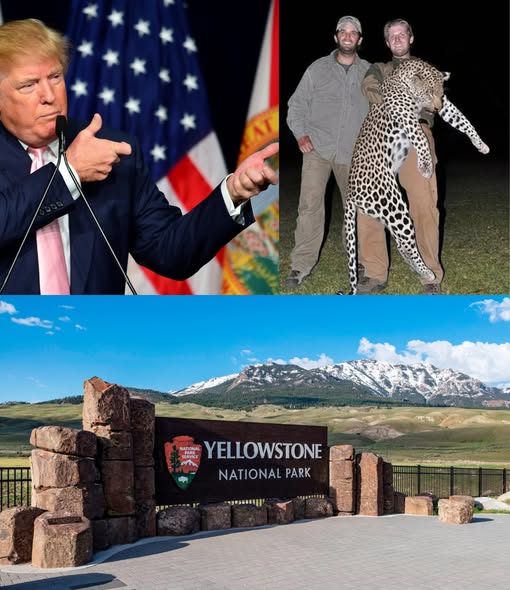
In a move that has ignited widespread outrage and concern, the Biden administration’s critics are raising alarms over a recent policy shift that threatens the integrity of the United States’ national parks. Under the directive signed quietly in January by Interior Secretary Doug Burgum—who was appointed during the Trump presidency—hunt restrictions across 55 designated sites within the National Park Service are being gutted, opening historically protected lands to trophy hunting and other potentially harmful practices.
The lack of public consultation or formal hearings has sparked fears that these changes prioritize the interests of a shrinking hunting elite over the shared public stewardship of America’s natural treasures. This secretive rollback effectively removes safeguards designed to protect both wildlife and visitors, transforming serene natural spaces into arenas for trophy hunters.
Already, disturbing examples are emerging. At Lake Meredith in Texas, hunters are now permitted to clean andgut their kills inside public restrooms—an act that raises serious health and safety concerns. Similarly, at Cape Cod National Seashore, hunting seasons are being extended into spring and summer, disrupting ecosystems and disrupting the natural tranquility that visitors expect. In Louisiana’s Jean Lafitte National Historical Park, alligator hunting is now explicitly on the table, along with permission for hunters to set tree stands that damage habitat, drive vehicles into wildlife areas to move carcasses, and hunt along trails where families and children ride bikes.
Meanwhile, only about 4.2% of Americans identified as hunters in 2024—a declining and shrinking minority—yet their influence appears to be overriding the interests of the vast majority who cherish these protected places. Conservationists have long argued that responsible hunting can support biodiversity and ecosystem health, but critics contend that the current policy shift does not reflect biological or conservation best practices—only the priorities of a few.
Bringing further controversy is the personal background of those issuing these policies. President Trump’s two adult sons, Don Jr. and Eric, are notorious trophy hunters. Photographs show them grinning beside slaughtered elephants, leopards, buffalo, and crocodiles in Africa and Asia—images that have stirred widespread criticism for glorifying trophy hunting on one of the world’s most endangered species. Instances such as Don Jr.’s 2019 hunt of an endangered argali sheep in Mongolia, for which he received a privately granted hunting permit after a meeting with the country’s president, exemplify a pattern of special treatment for wealthy hunters that many see as unfit for setting national policy.
Elaine Leslie, former head of the U.S. Park Service’s biological resources department, voiced her dismay: “I don’t want my grandkids walking past a gutted elk in a parking lot or stepping into a restroom where hunters are cleaning their game.” These spaces, Leslie emphasizes, were supposed to serve as safe, shared, and sacred parts of America’s natural heritage—places where everyone could find peace and connection, not zones for kill zones dictated by privilege and wealth.
This shift in policy symbolizes a broader perspective increasingly shared among many Americans: that public lands are not merely possessions to be exploited but invaluable resources for all. The current trajectory, critics warn, risks irreversibly degrading the natural beauty, wildlife populations, and family-friendly environments that have been the foundation of American conservation efforts for generations.
Where to Learn More
- National Parks Traveler – Analysis of Recent Policy Changes
- HuffPost – Public Outcry Over Shielding Raw Hunting Privileges in National Parks
- Washington Post – Inside the Trump Administration’s Push for Deregulated Hunting in National Parks
- National Geographic – The Impact of Trophy Hunting on Wildlife and Ecosystems