While Juneteenth has long been celebrated as a pivotal moment in American history, recent conversations are shedding light on a common misconception: it is not the day slavery officially ended in the United States. This clarification is crucial in understanding the true significance of the holiday and its deep-rooted history.
Many Americans associate June 19, 1865, with the end of slavery, but the reality is more complex. The Emancipation Proclamation, issued by President Abraham Lincoln on January 1, 1863, declared all enslaved people in Confederate states to be free. However, it was limited in scope, applying only to rebellious states, and was largely unenforced in regions like Texas. As a result, enslaved individuals in these areas remained in bondage long after the proclamation was issued.
It wasn’t until Union troops arrived in Galveston, Texas, on June 19, 1865, that freedom was effectively delivered to enslaved Texans. This date—over two years after the Emancipation Proclamation—marked the moment when the last enslaved people in Texas learned they were free. The significance of this date is reinforced by the fact that Black communities across Texas began celebrating emancipation informally, with church gatherings, cookouts, and prayer services dating back to the late 1860s, well before any government recognition.
Texas was indeed ahead of the curve nationally. In 1980, it became the first state to recognize June 19 as an official holiday, thanks to the efforts of state representative Al Edwards. For decades, Juneteenth remained a regional celebration rooted in community traditions, but it lacked federal recognition.
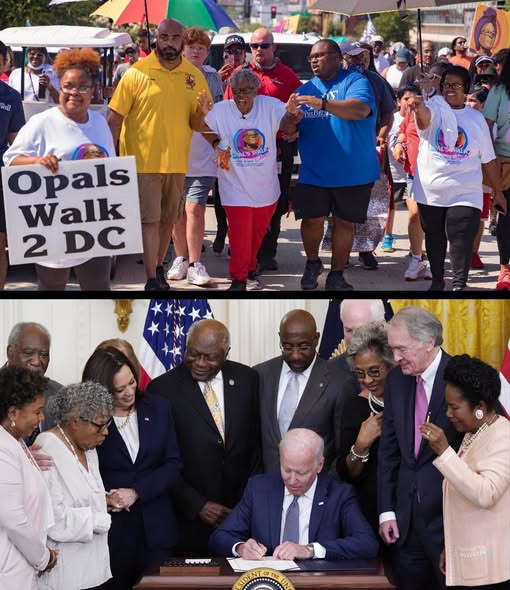
Change came in 2021, largely through the efforts of Opal Lee, a retired Fort Worth educator. At age 89, Lee embarked on a walk from Texas to Washington, rallying support and collecting over a million petition signatures advocating for a national holiday. Her relentless advocacy paid off when President Joe Biden signed legislation making Juneteenth a federal holiday—only the sixth in U.S. history, and the first since Martin Luther King Jr. Day in 1983.
Today, Juneteenth is more than a day off; it is a symbol of resilience, liberation, and ongoing pursuit of justice. It’s a day for Americans to celebrate freedom—both long-awaited and hard-won—with cookouts, music, parades, and family gatherings. These traditions echo the gatherings of formerly enslaved Black Americans who celebrated their newfound liberty with joy, faith, and community, long before federal recognition.
Yet, Juneteenth also serves as a reminder of how far the nation has come and how much work remains. Recognizing this history invites not just celebration but reflection—acknowledging the brutal legacy of slavery and the persistent fight against racial injustice. It’s an opportunity for the country to unite in honoring the resilience of Black communities and recommitting to the ongoing struggle for racial equality.
As we observe this holiday, let’s remember that freedom is a process, not just a moment in time. Juneteenth is a celebration of progress and a call to action—for justice, reconciliation, and a future where true equality prevails.