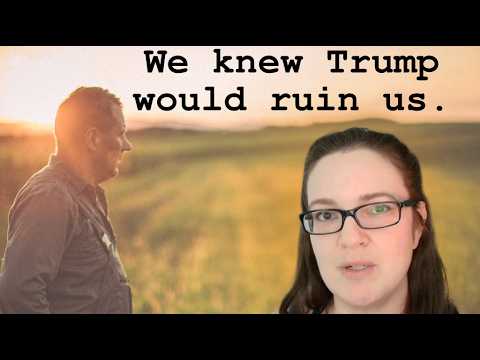
The political landscape surrounding agriculture has dramatically shifted, particularly in light of President Donald Trump’s controversial trade policies. A recent video featuring a North Carolina farmer sheds light on the dissatisfaction felt by many within the farming community, particularly those who initially supported Trump’s candidacy.

In the video, the anonymous farmer shares their experience during the 2024 election cycle, revealing a troubling paradox among farmers. While many anticipated the onset of the trade war with China—a significant campaign issue for Trump—there remains a sentiment that they and others were somehow misled about the consequences of these policies. “Everybody knew this was going to happen,” the farmer states, reflecting a deep-rooted awareness among agriculturalists regarding the potential fallout from Trump’s trade strategies.
As the farmer, who identifies as a Democrat and was campaigning for the role of Commissioner of Agriculture in North Carolina, articulates their confusion regarding the broader political alignment within agriculture. Despite engaging in dialogues with fellow farmers—many of whom are traditionally Republican—this agricultural candidate noticed a disconnect between political allegiance and practical realities stemming from Trump’s policies.
The trade war initiated by the Trump administration, characterized by the imposition of tariffs on various goods, has had a particularly adverse effect on U.S. farmers. Commodities like soybeans, corn, and pork have suffered as key export markets dwindled amid retaliatory tariffs from China. As a result, many farmers have faced significant financial hardships—an emergency that the featured farmer underscores in their narrative.
Compounding this discontent is the notion that during the campaign, farmers were persuaded by Trump’s rhetoric that their interests would be prioritized. However, many now feel betrayed as the reality of the trade war unfolded—leading to their current financial instability. The farmer’s candid assessment raises essential questions about accountability and the role of misinformation in the political process, particularly in contexts where economic livelihood is directly impacted by policy decisions.
The dialogue presented in the video reveals the critical intersection of agriculture and political affiliation, illuminating an essential narrative: many farmers find themselves conflicted about their loyalty to a party that has not delivered on its promises. This internal struggle is not merely about party politics but revolves around the fundamental challenge of reconstructing trust in political leadership amidst perceived economic betrayal.
As the 2024 election cycle progresses, the reflections of this farmer echo a larger sentiment in the agricultural community—one that underscores the necessity for political leaders to engage with the realities that farmers face on the ground. Potential candidates will need to address these grievances if they wish to secure the support of a constituency that feels increasingly disenfranchised.
Where to Learn More
- NPR – In-depth coverage and updates on agriculture and trade policies.
- Politico – Comprehensive political analysis and reporting, including farmer concerns related to trade wars.
- Reuters – Reliable news source for business and political news, including impacts on the agricultural sector.
- CNBC – Business news outlet covering the economic effects of trade policies on farmers.
- Farm Progress – A platform dedicated to agricultural news and trends affecting farmers across the United States.