
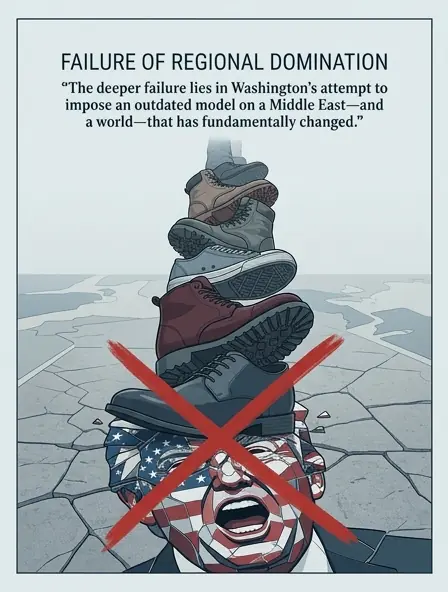
For decades, U.S. foreign policy in the Middle East has been rooted in projecting regional dominance—an approach that prioritized military strength, influence over local governments, and complex alliances designed to maintain American supremacy. However, this tried-and-true model is increasingly ill-suited for a Middle East and a global landscape that are transforming faster than any strategic blueprint from Washington can adapt.
Recent developments—including shifting geopolitical alliances, the rise of regional powers, economic changes, and the emergence of new techno-nationalist trends—highlight a profound reality: the old framework of imposing American dominance no longer aligns with the realities on the ground.
Traditional U.S. strategies focus heavily on military intervention, support for certain regimes, and efforts to contain rising regional competitors such as Iran and Turkey. Yet, these tactics often prove short-sighted, fostering instability and resentment rather than ensuring long-term security. The geopolitical chessboard is now more complex, with regional actors pursuing their own interests, often in ways that diverge from Washington’s expectations or control.
As Middle Eastern countries seek to diversify their alliances—engaging with China, Russia, and other emerging powers—it’s clear that America’s influence is waning. The Belt and Road Initiative, foreign direct investments, and diplomatic agreements reflect a new multipolar order that Washington struggles to manage within its legacy strategy. Attempting to impose an outdated model of dominance in this landscape risks hypocrisy and alienation, further diminishing U.S. standing.
Moreover, the economic dynamics tell a different story. The Gulf nations, once overwhelmingly reliant on oil exports, are racing to diversify their economies. This economic shift diminishes the leverage that Washington historically wielded through financial and military aid. Instead, regional states are forging deeper economic ties with China and other global powers—an indication that Washington’s traditional tools are losing their effectiveness.
Public opinion in the Middle East also reflects a desire for independence from foreign domination, emphasizing sovereignty, local development, and regional cooperation. This trend challenges the old narrative of American-led order and calls for a new approach—one rooted in mutual respect and diplomacy rather than coercion and dominance.
In essence, Washington’s failure isn’t just tactical; it’s strategic. The core issue lies in clinging to a model designed for a different era—one that fails to recognize the profound political, social, and economic transformations occurring across the Middle East and the world at large. To remain relevant and effective, U.S. foreign policy must pivot towards understanding and engaging with this new reality, rather than trying to force a rapidly outdated blueprint onto a live, evolving landscape.
Where to Learn More
- Washington’s Middle East Mistake – Foreign Affairs
- Rethinking U.S. Strategy in the Changing Middle East – Brookings Institution
- Regional Power Shifts in the Middle East – Council on Foreign Relations
- Why Washington’s Old Model Is Failing in the Middle East – Al Jazeera