
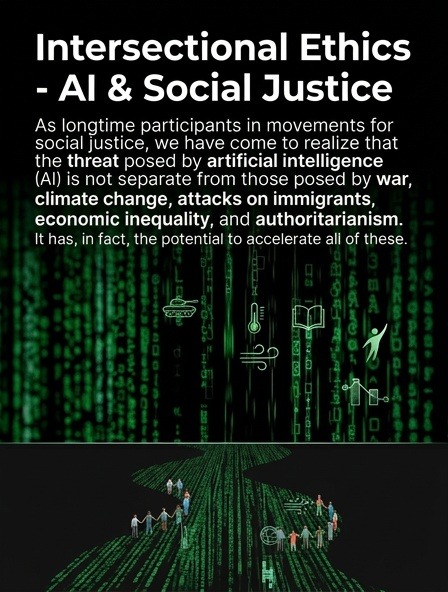
In a powerful recent social media post that has quickly gone viral among activists and thought leaders, seasoned participants in social justice movements are raising a clarion call: artificial intelligence (AI) is not just a new tool but a potential threat that could worsen existing global crises.
For years, advocates have fought against issues ranging from war and climate change to economic inequality and attacks on immigrant communities. Now, many are expressing concern that AI could amplify these problems rather than resolve them—potentially accelerating the very injustices that activists strive to dismantle.
“AI is often celebrated for its innovation and potential to improve lives,” says Maria Lopez, a longtime human rights advocate. “But without careful oversight, it could deepen socioeconomic divides, enable authoritarian control, and fuel harmful misinformation—things that fundamentally threaten social justice.”
Experts warn that AI’s ability to automate decision-making, manipulate information, and influence public opinion can be misused in manners that threaten democracy and human rights alike. For example, authoritarian regimes are increasingly deploying AI tools for surveillance and suppression, narrowing civic space and intimidating dissidents.
Climate change, another critical issue, faces new challenges with AI-powered data analysis that can be exploited to prioritize economic gains over environmental health. Critics argue that AI-driven algorithms could prioritize short-term profits for corporations at the expense of sustainable practices, thus undermining efforts to combat global warming.
Moreover, AI’s impact on economic inequality remains a pressing concern. As automation replaces traditional jobs, vulnerable populations risk further marginalization. Without inclusive policies, AI risks widening the gap between the wealthy and the poor, exacerbating social tensions that threaten collective well-being.
“We are at a crossroads,” emphasizes Jamal Bishop, a social justice organizer. “The technology itself is neutral; it’s how we choose to develop and govern it that will determine whether AI becomes a tool for liberation or oppression.” As such, grassroots movements are calling for stronger international regulation of AI development, increased transparency, and community-based oversight to ensure these powerful tools serve the common good.
This emerging perspective underscores a critical fact: AI is intertwined with the broader fabric of global injustice. As activists warn, ignoring its potential dangers could accelerate conflicts rather than resolve them, making a compelling case for integrating social justice principles into AI governance.