
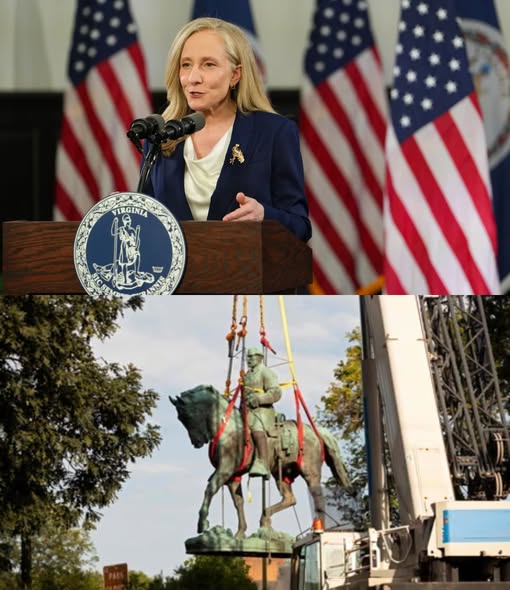
In a landmark move, Virginia Governor Abigail Spanberger has signed HB 167 into law, officially ending a 76-year-old taxpayer subsidy to Confederate-linked organizations. This legislation strips tax-exempt status from six prominent groups, including the United Daughters of the Confederacy, the Sons of Confederate Veterans, the Confederate Memorial Literary Society, the Stonewall Jackson Memorial, and the J.E.B. Stuart Birthplace Preservation Trust.
These organizations had long benefited from exemptions on state property taxes and recordation taxes—benefits that have been in place since 1950, during Virginia’s era of “massive resistance” against racial integration. For more than seven decades, these tax breaks effectively subsidized organizations that romanticized the Confederacy, reinforcing narratives of the “Lost Cause” while Black Virginians fought for their basic rights and equality.
The financial impact of these exemptions has been significant. For instance, the United Daughters of the Confederacy headquarters in Richmond alone avoided an estimated $50,000 or more annually in property taxes. That’s money which could have contributed to public schools, infrastructure, or community programs—especially in a city with a substantial Black population. Instead, it supported groups notorious for erecting Confederate monuments nationwide and promoting a version of history centered on states’ rights rather than slavery.
“A tax exemption is a privilege, not a right,” said state Delegate Don Askew before the bill’s passage. “This legislation does not challenge the right of these organizations to exist. It’s about fairness and prioritizing Virginia’s fiscal responsibilities.”
This initiative faced obstacles earlier in 2024 and 2025, when former Governor Glenn Youngkin vetoed similar bills. It was only after a new Democratic majority and Governor Spanberger’s leadership that the bill became law, marking an important victory for those advocating racial equity and historical accountability in Virginia.
Additionally, the governor signed legislation eliminating Virginia’s specialty license plates featuring Confederate figures such as Robert E. Lee and the Sons of Confederate Veterans. The Sons of Confederate Veterans responded with fiery condemnation, calling the move “terrible,” a clear indication of whose sentiments the law touches.
Despite being 161 years after the Civil War’s end, this is a rare and significant step toward reckoning with Virginia’s complicated past. Ending subsidies to organizations that romanticized slavery and racial oppression signals a shift in priorities—one rooted in fairness, justice, and the recognition of history’s true toll.
As elections increasingly reflect the will of the people, Virginia’s decision exemplifies how political leadership can directly impact social justice and historical narratives. The days of subsidizing the Confederacy are finally over—better late than never.