
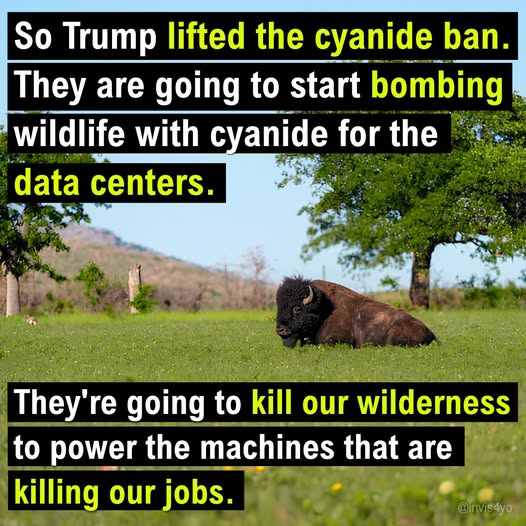
A recent social media post has stirred controversy and concern among environmentalists and wildlife advocates. The post suggests that a controversial policy change—allegedly by former President Donald Trump—lifted a ban on cyanide use, leading to fears that wildlife officials might begin deploying cyanide bombs on animals like rhinoceroses to extract data for tech companies involved in data centers.
At the heart of this viral post is a provocative image of a rhinoceros paired with a bold caption: “So Trump lifted the cyanide ban. They are going to start bombing wildlife with cyanide for the data centers. They’re going to kill our wilderness to get data.” While the message resonates deeply with environmental conservationists, many experts are quick to classify it as misinformation or an overreaction to unfounded claims.
Understanding the Claim
The social media post implies that a policy decision—possibly recent or hypothetical—has authorized the use of lethal cyanide devices in wildlife areas, supposedly to assist tech companies in data infrastructure development. The conflation of wildlife protection policies with technology expansion has sparked widespread alarm, especially among social media users concerned about endangered species and pristine ecosystems.
Fact-Checking the Claim
To date, there is no credible evidence that any government agency—whether under Trump or current administration—has lifted bans on cyanide use in wildlife management for the purpose described. The use of cyanide in wildlife control is heavily regulated, mainly for specific cases like pest eradication, and is subject to strict ethical and environmental safeguards.
Environmental experts and wildlife conservation organizations emphasize that cyanide poisoning is a targeted, unethical, and destructive practice, not a standard or sanctioned method for wildlife data collection. The idea that wildlife like rhinoceroses would be deliberately bombed or poisoned to gather data is a gross misrepresentation of lawful conservation practices.
The Real Threats Facing Wildlife
While the viral narrative may be exaggerated or false, it underscores a legitimate concern: the ongoing threats to wildlife from poaching, habitat destruction, and illegal wildlife trade. Rhinoceroses, in particular, face severe risks from poaching fueled by demand for their horns. Data centers and tech infrastructure do pose environmental challenges, but these are governed by clear regulations designed to minimize ecological impact.
Why Misinformation Spreads
Social media often amplifies sensational claims due to emotional appeals and simplified narratives. It’s crucial for the public to consult reliable sources before drawing conclusions about complex conservation and policy issues. False claims not only distract from real environmental challenges but can also incite unnecessary panic and hinder effective conservation efforts.
Conclusion
As of now, the claim that cyanide bans have been lifted and wildlife is being bombed with cyanide to benefit data centers is unfounded. It’s a reminder of the importance of critical thinking and fact-checking in the age of viral misinformation. Protecting our wilderness requires informed public discourse rooted in verified facts, not fear-mongering posts.