In a world where political leaders often cling to power against all odds, Hungary’s Prime Minister Viktor Orbán has sparked an unusual wave of discussion on social media by conceding defeat gracefully in a recent election. Despite widespread criticism of Orbán’s governance style and policies, many observers have noted his integrity in accepting electoral results—something increasingly rare in today’s political climate.
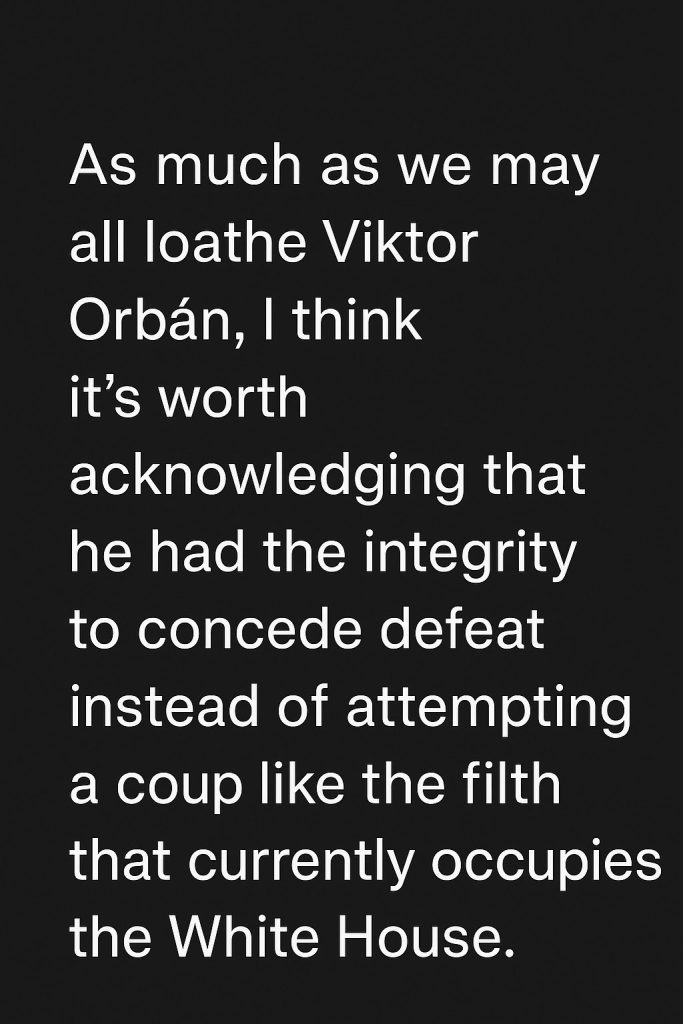
The comment that ignited this conversation came from a user named tim793360, who took to Twitter to highlight Orbán’s unexpected decision: “As much as we may all loathe Viktor Orbán, I think it’s worth acknowledging that he had the integrity to concede defeat instead of attempting a coup like t[others].” Though truncated, the comparison to leaders who refuse to step down resonates deeply given recent global events where electoral losers have challenged democratic norms.
Orbán, a polarizing figure known for his nationalist rhetoric and strongman approach, has long been a subject of international scrutiny. Critics accuse him of eroding democratic institutions and tightening control over the press and judiciary. Yet, this concession moment offers a rare glimpse of principled politics, defying expectations from both supporters and detractors alike.
Experts suggest that Orbán’s acceptance of defeat may be a strategic decision, recognizing Hungary’s evolving political landscape and the limits of contesting democratic outcomes publicly. It also underlines how even controversial politicians can act within the bounds of democracy when faced with the will of the electorate.
Social media responses have been mixed but largely appreciative of this gesture. Many commentators emphasize that integrity in leadership transcends personal or ideological preferences, representing a cornerstone for healthy democratic processes. In an era marked by attempts to undermine elections, Orbán’s concession, albeit unexpected, has been viewed by some as a reaffirmation that democracy can withstand even the most contentious contests.
However, others caution that a single act of concession does not negate years of authoritarian behavior or the broader context of Orbán’s political legacy. They urge the international community to maintain vigilant oversight and continue supporting democratic reforms in Hungary.
Ultimately, this episode underscores the complexity of modern political leadership, where figures can simultaneously draw sharp criticism and unexpected respect. As the world watches Hungary’s political developments, Orbán’s concession will likely remain a poignant example of how integrity can surface even in challenging environments.
Where to Learn More
- Viktor Orbán: Hungary’s controversial leader concedes election – BBC News
- Hungary’s Orbán concedes in election, marking rare democratic moment – Al Jazeera
- The controversial legacy of Viktor Orbán – Deutsche Welle
- Hungary’s Political Landscape and Elections – Council on Foreign Relations