
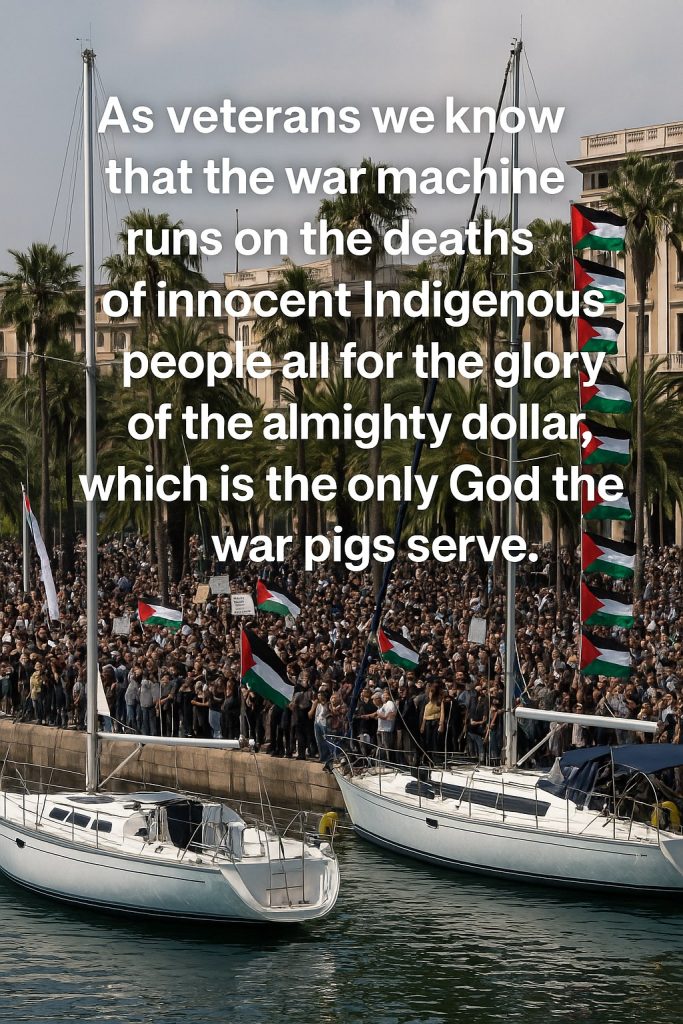
In a stirring expression shared widely across social media, a group of veterans has brought to light a longstanding and troubling reality: the grim symbiosis between the military-industrial complex and the tragic toll it exacts on Indigenous communities. Their bold assertion draws attention not only to the suffering of marginalized groups but also critiques the overarching capitalist motives behind armed conflicts.
The statement, which has gone viral, resonates deeply with those who have served in the military. It articulates the heart-wrenching truth that the gears of war often turn on the innocence of Indigenous peoples, echoing a history riddled with violence and exploitation. “As veterans, we know that the war machine runs on the deaths of innocent Indigenous people all for the glory of the almighty dollar,” they assert, calling out the “war pigs” who prioritize profit over humanity.
These poignant reflections are more than a personal sentiment; they delve into historical injustices where Indigenous populations have been disproportionately affected by warfare. From land seizures to cultural erasure, Indigenous people have borne the catastrophic consequences of conflicts driven by wealth accumulation. Wars, often glorified in popular narratives, reveal a dark underbelly where corporate interests and military contracts supplant ethical considerations.
Veterans have a unique perspective on this issue. Many have witnessed firsthand the impact of foreign and domestic conflicts on Indigenous communities. Conflict zones often amplify existing struggles, as vulnerable populations face displacement and violence while entities profit from chaos. The recent resurgence of Indigenous activism reminds us that these communities are not merely collateral damage but are integral to a broader narrative of resistance against colonialism.
Furthermore, the veterans’ statement challenges the hero-worship often associated with military service, infusing it with a social consciousness that urges reflection on whom we truly serve. The statement positions the veterans as advocates not only for their fellow service members but for the innocent victims of war, reminding society of the complex moral implications behind military actions. Their candid dialogue disrupts the simplistic notion of good versus evil often portrayed in mainstream media and invites a more nuanced understanding of global conflicts.
According to a report by the National Congress of American Indians, Indigenous communities experience a disproportionate impact from military recruitment and resultant conflicts. The veterans’ message serves as a call for solidarity, urging fellow Americans to see beyond nationalistic fervor and acknowledge the lives affected by their collective choices.
The viral nature of this message reflects a growing willingness to engage in uncomfortable conversations about the ramifications of war, capitalism, and colonial legacies. In a time when social media serves as both a platform and a megaphone for marginalized voices, the veterans are harnessing the power of technology to shift narratives and provoke thought.
In a world often characterized by indifference to systemic injustice, the bravery to speak out illustrates the enduring bond of empathy forged in shared experiences. Veterans rallying for Indigenous rights signal a pivotal moment of intersectionality that could transform how we address these issues at both the grassroots level and in policy-making. As the discussion unfolds, the hope is that it nurtures a deeper understanding of the costs of war—not just in dollars and cents, but in lives irrevocably changed.
Where to Learn More
- Military and Indigenous Tribes – National Congress of American Indians
- Indigenous Peoples and Military Conflict – Amnesty International
- Veterans & Land Acknowledgment – HuffPost
- Indigenous Nations and Veterans Day – The Guardian