
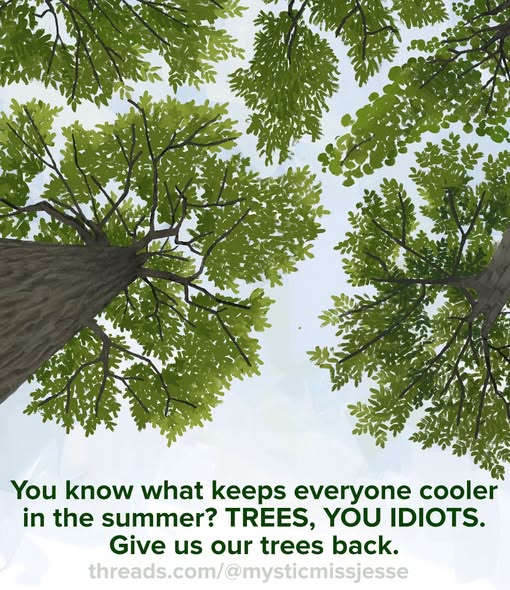
In an era where climate change is intensifying heatwaves and urban temperatures are soaring, a simple yet powerful solution often goes unnoticed: trees. A viral social media post has reignited the debate about the importance of preserving and expanding green spaces, emphasizing that “trees keep everyone cooler in the summer.” The post, accompanied by a striking image of a lush tree and the fiery words, “You know what keeps everyone cooler in the summer? TREES, YOU IDIOTS. Give us our trees back.” has quickly gained traction across platforms like Threads, sparking conversations about urban planning, environmental conservation, and climate justice.
Research consistently shows that trees play a critical role in moderating temperature. Urban environments, often characterized by concrete, asphalt, and minimal greenery, create a “heat island” effect where temperatures can soar 5 to 9 degrees Fahrenheit higher than surrounding rural areas. Trees provide shade, reduce surface temperatures through shade and evapotranspiration, and improve air quality. Their absence not only leads to increased discomfort but also heightens health risks, particularly for vulnerable populations such as children, the elderly, and individuals with pre-existing health conditions.
The viral post’s blunt and passionate tone underscores a frustration shared by many city residents and environmental advocates. “We’ve seen city parks and green spaces cut down or paved over in the name of development,” says environmental activist Janelle Porter. “But what everyone seems to forget is that trees are living, breathing infrastructure that protects us from the worst of the weather.”
Many urban areas have responded to climate challenges by planting more trees and integrating green infrastructure into city planning. Cities like New York, Los Angeles, and Portland have launched ambitious programs to increase tree canopy cover. However, urban development pressures, deforestation, and climate-induced storms threaten these efforts. The viral call to action echoes a larger plea for policymakers and citizens alike to prioritize green spaces as a vital component of climate resilience.
Experts argue that beyond cooling, trees provide a host of other benefits: improved air and water quality, habitat for wildlife, mental health benefits through contact with nature, and increased property values. “The presence of trees can reduce energy costs for cooling in the summer and heating in the winter,” notes urban forestry specialist Dr. Mark Johnson. “It’s a cost-effective, sustainable way to combat some of our most pressing urban climate challenges.”
As the debate heats up on social media, one thing is clear: the fight for our green spaces is also a fight for our health, our environment, and the future of urban living. Restoring and protecting our trees is not just an aesthetic concern—it’s a vital ecological and public health necessity. So next time you see a tree, remember: it’s more than just greenery; it’s a natural shield against rising temperatures and a crucial part of life in our cities.
Where to Learn More
- Urban Heat Islands and How Trees Can Help – Natural Resources Defense Council
- Urban Forestry: The Importance of Trees in Cities – U.S. Forest Service
- Planting Trees Is a Cost-Effective Climate Solution – World Resources Institute
- Reducing Urban Heat Islands with Green Infrastructure – Environmental Protection Agency