
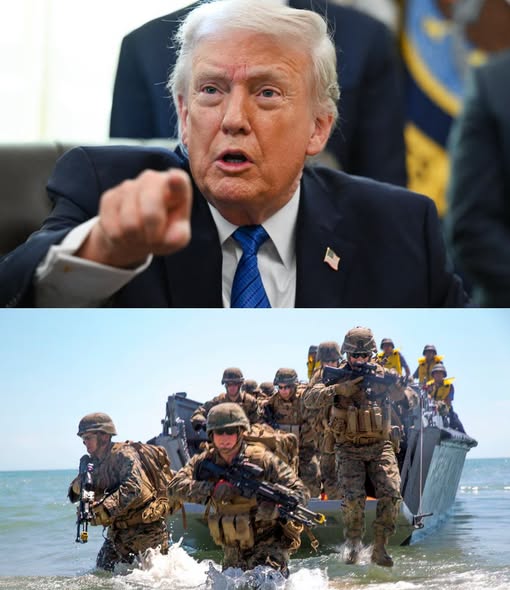
The United States appears to be gearing up for a major escalation in its approach to Iran’s maritime activities, with reports indicating plans to board and seize Iranian-linked vessels in international waters worldwide. According to The Wall Street Journal, citing anonymous U.S. officials, the Trump administration is preparing to deploy forces in what has been dubbed an operation named “Economic Fury.” This initiative would see American forces physically boarding and potentially seizing oil tankers and commercial vessels linked to Iran, not just in the Persian Gulf but across international waters around the globe.
The development marks a significant departure from previous U.S. strategies, escalating tensions in a region already fraught with conflict. The Chairman of the Joint Chiefs of Staff publicly confirmed the plans, stating that the U.S. “will actively pursue any Iranian-flagged vessel or any vessel providing material support to Iran”—a stark warning of the expanded scope of military operations that could involve vessels anywhere in the international maritime domain.
This surge in military posture comes amid a turbulent 48 hours of diplomatic and maritime back-and-forth. Last Friday, Iran announced it would reopen the Strait of Hormuz to commercial traffic, a move that temporarily eased oil prices by 11%. U.S. President Donald Trump celebrated online, but almost immediately after, he declared that the U.S. naval blockade of Iranian ports would “remain in full force.” The Iranian response was swift and retaliatory, with Revolutionary Guard gunboats firing shots at a tanker near Oman. Additionally, Indian-flagged ships encountered hostile fire, and a container ship was reportedly hit by a rocket off the Omani coast.
These provocative acts underscored Iran’s rejection of the U.S. blockade and signaled a rapid escalation of hostilities. Instead of preserving the recent de-escalation efforts, President Trump appeared intent on a more aggressive approach, announcing that he would pursue the seizure of Iranian vessels in open waters. His comments on the matter have raised serious legal questions, as international law generally prohibits the boarding and seizure of foreign commercial vessels in international waters during peacetime—acts that could be classified as piracy.
Furthermore, the move comes amid a complex legislative landscape. The War Powers Resolution deadline, which requires Congressional approval for military action extending beyond certain limits, is fast approaching at the end of September. Recent votes in Congress on war authorization have fallen just short; the House vote failed by a single vote, and the Senate’s tally was 47-52 against further military engagement, leaving President Trump’s plans without formal congressional backing.
In a provocative statement to reporters from the Oval Office, Trump dismissed Iran’s military capabilities outright, saying, “They have no navy. They have no air force. They have no leaders. They have no nothing.” The remarks seemingly confirm broader U.S. intentions of strategic regime change under the guise of maritime enforcement.
As the ceasefire deadline on Iran’s nuclear deal looms this upcoming Tuesday, the situation remains highly volatile. The Strait of Hormuz remains closed, maritime attacks continue, and the U.S. military is preparing to seize Iranian vessels in international waters—actions that experts warn could further destabilize the region and set a dangerous precedent without proper congressional authorization.
With diplomacy on the brink and military escalation intensifying, the coming days could redefine U.S.-Iran relations and the stability of the Persian Gulf region for years to come.