
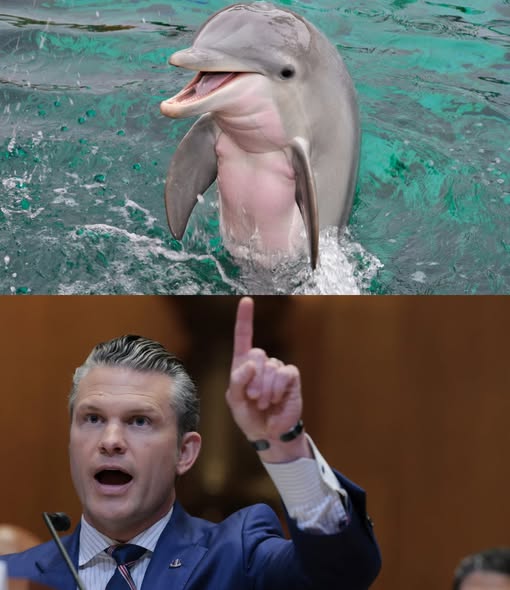
In an astonishing moment at a Pentagon briefing Tuesday, Defense Secretary Pete Hegseth made a comment that instantly went viral, raising eyebrows across social media and military circles alike. When queried about whether Iran possesses “kamikaze dolphins,” Hegseth responded with a smirk and a wink, stating, “I can’t confirm or deny whether we have kamikaze dolphins. But I can confirm they don’t.”
The remark was met with a mixture of amusement, confusion, and incredulity. Sitting beside Joint Chiefs Chair Gen. Dan Caine, who admitted he had not heard of the “kamikaze dolphin” rumor, Hegseth’s offhand comment quickly overshadowed serious discussions. The moment drew comparisons to the infamous “sharks with laser beams” joke from Austin Powers — a pop culture reference highlighting the bizarre nature of what was supposed to be a high-level military briefing.
However, beneath the humor lies a complex reality. The United States does possess a long-standing military marine mammal program, involving trained dolphins and California sea lions deployed for vital underwater operations. These animals have historically helped detect mines, identify underwater threats, mark objects of interest, and guard harbors from unauthorized divers or swimmers. These are real animals, actively used by the U.S. Navy for critical missions—not cartoon villains with sassy one-liners.
Moreover, the use of marine mammals is not exclusive to the United States. Russia has reportedly used trained dolphins during its Black Sea operations, with dolphin pens discovered near the Sevastopol naval base. Iran, meanwhile, has long been linked to rumors of Soviet-era-trained dolphins, adding fuel to the speculation that such animals could serve in underwater mine warfare or coastal defense.
What makes the “kamikaze dolphin” rumor particularly compelling — yet almost surreal — is the current geopolitical climate. The Strait of Hormuz, a critical chokepoint for global oil shipments, remains heavily mined and unstable amid rising tensions. Oil markets are jittery, and the Pentagon continues to clarify its posture amid ongoing conflicts, including the war in Ukraine.
This blend of serious geopolitical threats and offbeat rumors reveals a troubling trend: when serious issues get tangled with sensational assertions, it becomes harder to focus on the real dangers at hand. The bizarre moment in the briefing, with Hegseth joking about weaponized dolphins, exemplifies how the boundaries of credibility are sometimes blurred in modern discourse — especially when unserious statements overshadow pressing national security concerns.
Hegseth, who is more often associated with political commentary, should instead be addressing the very real risks to sailors, shipping lanes, and oil supplies. Instead, he offered a punchline, turning a critical security briefing into a scene more fitting for a spy comedy than an informed policy discussion.
This episode underscores the importance of maintaining professionalism and focus on serious issues in national security discussions. While the idea of military dolphins with kamikaze tendencies seems straight out of a Hollywood script, the real story involves complex, tangible threats that demand sober attention—not smirks and punchlines.
Where to Learn More
- U.S. Navy Marine Mammal Program – U.S. Navy
- Russia’s Use of Dolphins in Black Sea Operations – BBC News
- Debunking the Myth of Kamikaze Dolphins in Modern Warfare – CNN
- Russia, Iran, and the Secret World of Military Dolphins – Foreign Policy