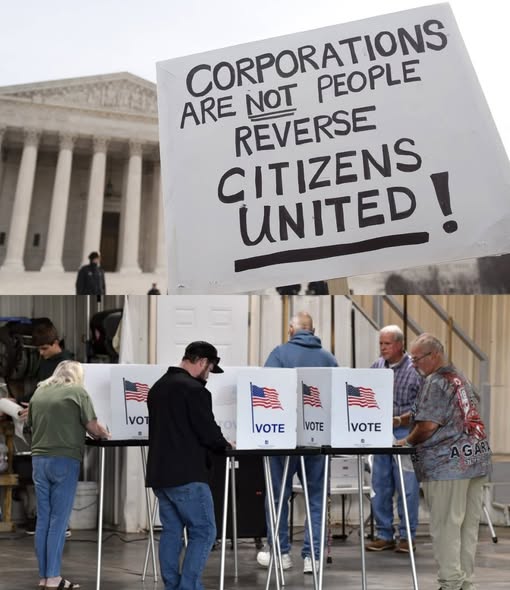
In an unprecedented move that seems straight out of a dystopian novel, a recent court ruling in Delaware has legalized corporations, LLCs, and trusts to cast ballots in local elections—placing corporations on a voting par with human citizens. This decision, quietly made in Fenwick Island’s 2024 municipal election, is already reshaping the electoral landscape in ways few could have imagined.
During the 2024 election cycle, an astounding 109 votes—accounting for roughly 23% of all ballots—were cast by non-human entities. These votes did not represent individual citizens but came from corporations and trusts holding voting rights in local races. Town council seats, tax decisions, and regulations that govern what these corporations are allowed to do are now partly decided by the very entities that lack consciousness, feelings, or the capacity to suffer.
The American Civil Liberties Union (ACLU) swiftly challenged this development, filing a lawsuit to halt the practice. However, the court dismissed the challenge, effectively greenlighting a dangerous precedent: corporations being recognized legally as voters.
The implications are staggering. Delaware, home to over 2 million business entities—more than two times its population of fewer than 800,000 registered voters—has become the epicenter of this disturbing trend. As these entities outnumber actual citizens, they are gaining duopolistic influence in local governance, *deciding* policies that affect their operations and, indirectly, the lives of real residents.
This transformation didn’t happen overnight. As Thom Hartmann of Common Dreams points out, it traces back to a seemingly insignificant footnote in an 1886 railroad case. Over more than a century, through landmark rulings such as Buckley v. Valeo, First National Bank v. Bellotti, and Citizens United, the legal doctrine evolved, increasingly favoring corporate rights over individual citizens’ voices. What once was a fringe concern has now culminated in a situation where corporations are effectively voting, shaping laws, and influencing the democratic process from within.
Legal expert and critic Thom Hartmann warns that this is not merely a slippery slope—it’s a leap onto a cliff. The next Fenwick Island election is scheduled for August 1, 2026, with corporations able to register to vote until June 30. Several other Delaware towns are already allowing this practice, and the momentum suggests it could rapidly spread elsewhere.
What are the stakes? A vote is traditionally a reflection of *life, hope, family, and future*. It’s a mechanism that represents human struggles and aspirations. A corporation, however, cannot suffer, worry, or dream. It does not have children, homes, or a future to protect. Yet, it now has a vote that shapes the very laws it must obey, the taxes it pays, and the regulations it faces.
This development raises critical questions about the integrity of our democracy. If the fundamental principle of voting is that it should represent the voice of the people, what does it say when non-human entities are increasingly participating in shaping our communities? As this dangerous trend continues, the line between corporate power and civic rights blurs, threatening the core of democratic governance.
As critics warn, we are already at the bottom of a precipitous slope. The question is no longer whether this will expand—it already is. The real issue is whether we will recognize what is happening in time to push back.