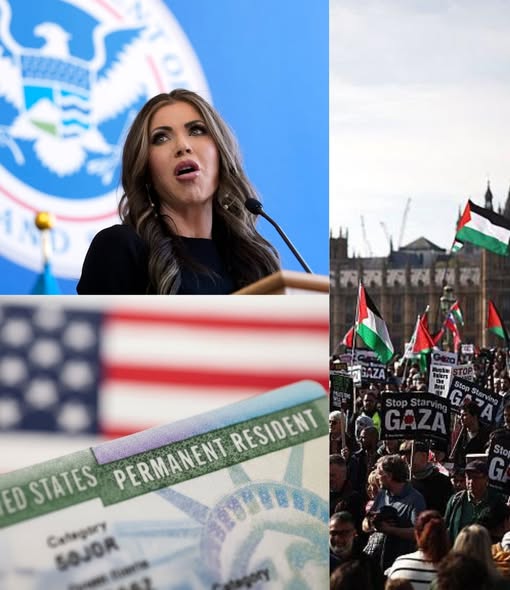
In a startling shift that signals a new era of ideological scrutiny within the U.S. immigration system, internal Department of Homeland Security (DHS) training materials reveal that prospective permanent residents are now being screened for their social media activity, particularly regarding opinions about Israel and related political issues. These revelations, reported by The New York Times and echoed by Democracy Now over the weekend, underscore a growing trend of political vetting that extends far beyond traditional security concerns.
According to the documents, immigration officers are instructed to deny green cards to applicants who have engaged in online expressions critical of Israel, participated in pro-Palestinian protests, or symbolically expressed anti-Israel sentiments, such as crossing out the Israeli flag in social media posts or overlying geographic maps with the word “Palestine.” The key criterion is not violent action or criminal behavior, but rather the social media narrative.
Officers are directed to treat these online expressions as potential evidence of “antisemitic” ideology and escalate any cases involving “potential anti-American and/or antisemitic conduct” directly to supervisors and the agency’s general counsel. This approach effectively equates certain political opinions—particularly those deemed sympathetic to Palestinians or critical of Israeli policies—with disqualifying ideological markers.
The move raises serious questions about free speech rights and the boundaries of immigration vetting. Traditionally, the U.S. reviews applicants for threats like terrorism, criminal history, or national security risks. Now, it appears the category has expanded to include the **opinions** expressed online, even when no physical act or violence is involved.
What’s most alarming is the implication that an individual with no criminal record, no violent history, and no affiliation with designated extremist groups could be permanently barred from residency solely based on a social media post deemed politically unacceptable by authorities. The policy effectively creates a political litmus test, where greater emphasis is placed on one’s online narrative rather than real-world actions.
The White House responded to the controversy, stating the policy has “nothing to do with free speech.” However, critics point out that the Supreme Court has repeatedly ruled in favor of protecting expressive conduct like flag-burning, which the administration now seems to be scrutinizing through a different lens as a basis for immigration decisions.
This development is part of a broader pattern of increased enforcement measures. The Biden administration has also set aggressive targets—the DOJ is pursuing 100 to 200 denaturalization cases each month, targeting naturalized Americans at a rate ten times higher than previous years. In the first wave, 384 individuals have already been identified for potential citizenship revocation.
As these sweeping policies take shape, many are questioning whether the government is building a society where personal beliefs and political opinions threaten to determine one’s right to remain legally in the country. Critics warn that this blurring of lines between free speech and national security could lead to a dangerous precedent, where dissent is equated with disloyalty.
While the administration claims the measures are rooted in anti-discrimination efforts, especially concerning antisemitism, the reality of social media screening for political viewpoints raises profound concerns about privacy, freedom, and the future of American immigration policy.
Where to Learn More
- New York Times: DHS Uses Social Media to Screen Immigrants’ Political Views
- Democracy Now: Internal DHS Materials Reveal Social Media Vetting for Immigration
- American Civil Liberties Union: Concerns Over Free Speech and Immigration Policies
- CNN: Experts Warn of Implications of Social Media-Based Immigration Screening