
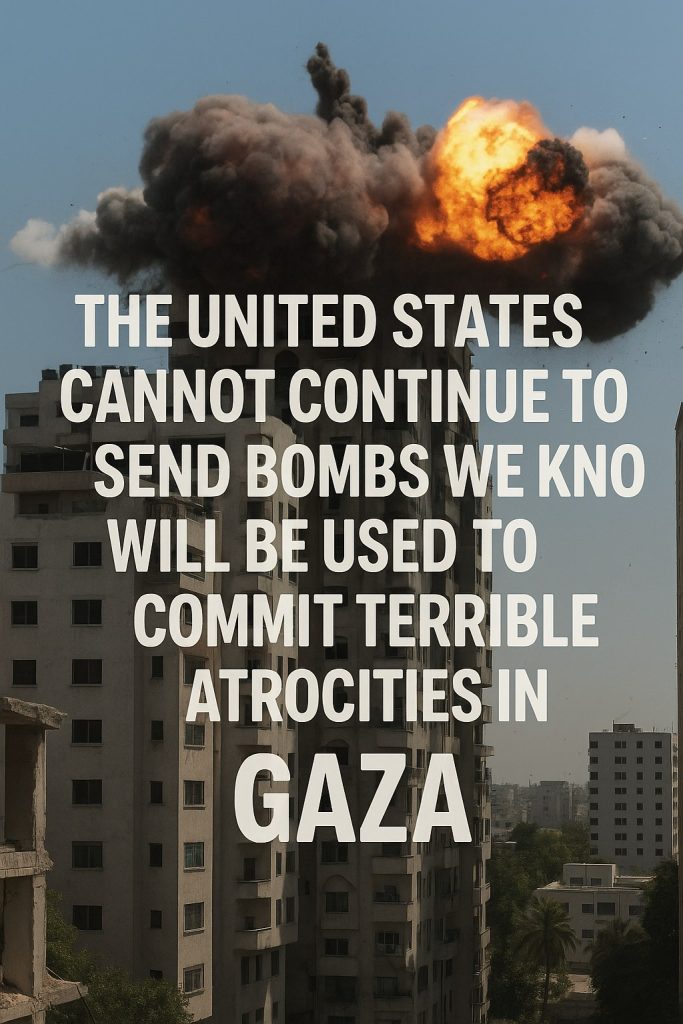
The discourse surrounding U.S. military aid has entered a new and contentious phase as social media users amplify calls to reconsider the implications of weapons being sent to conflict zones, particularly Gaza. A statement circulating widely on platforms such as Twitter and Facebook reads: “The United States cannot continue to send bombs we know will be used to commit terrible atrocities in Gaza.” This sentiment resonates with a growing number of citizens who are grappling with the ethical ramifications of American military support abroad.
As the Israeli-Palestinian conflict escalates, the humanitarian consequences have come under unprecedented scrutiny. Activists and critics argue that U.S.-made bombs have been used in operations against civilians, leading to devastating loss of life and extensive damage to civilian infrastructure in Gaza. The call to action highlights a significant juxtaposition between national security interests and humanitarian accountability.
Supporters of continued military aid argue that such support is crucial for Israel’s defense against terrorism, positing that the U.S. has a strategic alliance with Israel that necessitates military backing. However, opponents contend that enabling a conflict with such severe civilian ramifications contradicts American values and ideals, especially in protecting human rights.
The moral implications of providing military aid have spurred a robust debate that transcends mere statistics and geopolitical strategy. American citizens are increasingly questioning whether their tax dollars should fund programs that contribute to civilian suffering, igniting discussions about the ethical responsibilities associated with foreign policy decisions. As bomb images and reports of atrocities circulate online, social media becomes a powerful platform for advocacy, allowing voices from across the globe to unite against perceived injustices.
Furthermore, this conversation is not occurring in a vacuum. The Biden administration has faced scrutiny not just from grassroots activists but also from lawmakers across party lines. Some members of Congress have publicly expressed their concerns, calling for a reevaluation of arms sales to countries engaged in violence against civilians. This indicates a shift in political discourse where humanitarian concerns are gaining more substantial attention.
In recent months, there has also been a rise in grassroots movements, urging the U.S. government to reassess its foreign military assistance policies, particularly in light of human rights violations reported by international organizations. With keywords such as #GazaUnderAttack and #StopArmingIsrael trending on social media, it has become abundantly clear that public sentiment is shifting.
The call for the U.S. to cease supplying bombs for potential atrocities is about more than simply arms; it’s about the implications of complicity in human suffering. As the repercussions of military might continue to resonate through global communities, this issue raises essential questions about the moral obligations of one nation toward another and what it means to prioritize human rights in geopolitical decisions.
As discussions continue and social media amplifies voices from all sides, one thing is clear: the conversation about U.S. responsibility in conflict zones, particularly Gaza, is unlikely to dissipate anytime soon. The urgency for accountability in military aid is more prevalent than ever, and as awareness grows, so too does the demand for change.
Where to Learn More
- U.S. Arms to Israel Have Consequences: Human Rights Watch – Human Rights Watch
- The Ethical Dilemma of U.S. Arms Sales to Gaza – The Guardian
- U.S. Military Aid and the Gaza Crisis – CNN
- Is U.S. Support for Israel Sustainable Amid Humanitarian Crisis in Gaza? – BBC News
- America’s Ethical Dilemma: Arms Sales to Israel – Reuters