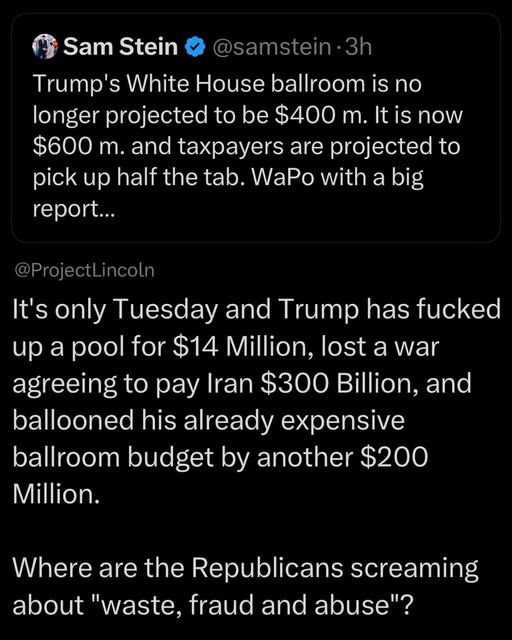
The cost to refurbish and maintain former President Donald Trump’s luxurious White House ballroom has surged dramatically, prompting widespread concern and scrutiny among taxpayers and political observers alike. Originally projected at around $400 million, recent reports now estimate the final price tag to reach an astonishing $600 million, with taxpayers expected to bear half of this financial burden.
The revelation comes after a social media post by @samstein, highlighting a dramatic increase in the projected costs. The post, which has since gone viral, states: “Trump’s White House ballroom is no longer projected to be $400M. It is now $600M, and taxpayers are projected to pick up half the tab.” These figures, if confirmed, mark a substantial escalation from initial estimates. The dramatic bump in costs raises questions about transparency, project scope, and accountability, especially given the funding sources involved.
The context surrounding this spike points to extensive renovations and upgrades that have taken longer and become more expensive than initially anticipated. Critics argue that such expenditures are an unnecessary drain on public resources, especially given the symbolic and political significance of the White House as a historic landmark. Meanwhile, supporters contend the renovations are essential for preserving the integrity of the building and ensuring it meets modern standards.
What makes this situation particularly controversial is the proportion of costs projected to be covered by taxpayers—roughly 50%. This means, potentially, hundreds of millions of dollars could come from government funds, stirring debates about fiscal responsibility, presidential privilege, and the use of public money for what many see as extravagance.
Legal experts and political analysts are scrutinizing the project’s funding arrangements, wondering whether appropriate oversight has been maintained. The White House has yet to officially comment on the latest estimates, but the rising costs have already sparked criticism from various members of Congress and watchdog groups who argue that transparency and accountability are paramount.
This controversy underscores broader debates about presidential perks, the use of government funds for private projects, and the mounting costs associated with historic preservation efforts. As the situation develops, many are calling for detailed breakdowns and audits to ensure taxpayer dollars are used responsibly.