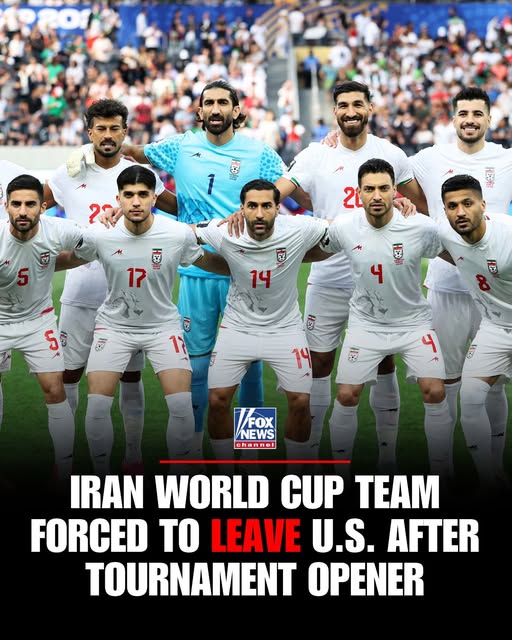
In a startling turn of events at the FIFA World Cup, the Iranian national team found themselves abruptly forced to leave the United States immediately following their tournament opener. The team, which had initially planned to spend the night in California, was instructed after their match that they must leave the country without delay and return to Mexico, specifically to Tijuana, just 140 miles south of the U.S.-Mexico border.
According to reports and statements from team coach Amir Ghalenoei, the players and staff were told they had to depart the United States immediately after their game, with no prior warning or explanation provided. “Our team is perhaps the most oppressed in the World Cup,” Ghalenoei remarked, expressing frustration and confusion over the sudden decision. As of now, the reason for their expulsion remains unclear, and authorities have not issued any official statement regarding the incident.
The Iranian team’s journey has been tumultuous from the start. Their debut match took place in California, but soon after the final whistle, team officials received orders that contradicted their expectations of a brief rest period. Instead, they were swiftly escorted to planes headed towards Tijuana, where they are expected to stay for the duration of the tournament, barring any further developments. This abrupt departure has raised questions about the diplomatic and political tensions potentially influencing the team’s treatment.
Eyewitnesses and diplomatic sources suggest that the timing and nature of the team’s expulsion are highly unusual under FIFA’s standard protocols, which normally prioritize player safety and fair competition. The incident has sparked a wave of criticism, with many wondering whether the act was based on security concerns or other undisclosed reasons.
Coach Ghalenoei’s comment underscores the gravity of the situation: “I think our team is perhaps the most oppressed in the World Cup.” His words resonate with fans and observers worldwide who have voiced concern over what they describe as a possible politicization of sporting events, especially at such a prestigious global stage as the World Cup.
As the story develops, the international community remains attentive. Many are calling for transparency from FIFA and U.S. authorities regarding the circumstances of Iran’s expulsion. Meanwhile, the Iranian team’s players have expressed their determination to continue competing and representing their country, despite the hardships and abrupt turn of events.
This unprecedented incident highlights the complex intersection of sports, politics, and diplomacy, reminding us that even in the world of international football, geopolitical tensions can cast long shadows. Fans around the globe are hopeful for clarity and fairness as this story unfolds.