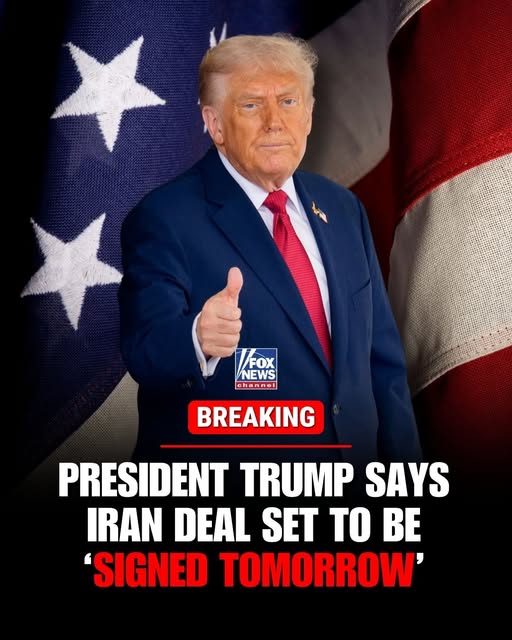
In a dramatic development in Middle Eastern diplomacy, President Donald Trump has announced that a groundbreaking agreement with Iran is scheduled to be signed tomorrow. This historic deal aims to de-escalate tensions and restore freedom of navigation through the vital Strait of Hormuz, a narrow waterway through which approximately one-fifth of the world’s oil passes daily.
President Trump took to social media, confirming the imminent signing and emphasizing the significance of the agreement. “Immediately after it is signed, the Hormuz Strait is OPEN TO ALL,” he tweeted, signaling a potential shift toward peace and stability in a region long plagued by conflict and uncertainty.
During a brief statement from the Oval Office, President Trump described the deal as a significant departure from the Obama-era nuclear agreement, commonly known as the JCPOA. “This new agreement will permanently prevent Iran from obtaining a nuclear weapon,” he asserted, contrasting it sharply with previous negotiations which critics argued failed to curb Iran’s nuclear ambitions effectively.
According to the President, a core feature of this deal is that “no money will exchange hands”, a point he underscored to differentiate it from past agreements that involved financial transactions seen by some as empowering Iran economically. Trump warned that if the process falls apart, the United States has “the ultimate alternative,” hinting at the potential for renewed sanctions or military action, though he did not specify what that might entail.
Analysts suggest that this announcement could mark a pivotal moment in U.S.-Iran relations, which have been largely strained since the breakdown of previous negotiations and the reimposition of sanctions under the Trump administration. The deal’s success could open up strategic waterways, bolster regional stability, and possibly pave the way for broader diplomatic engagement in the Middle East.
However, experts remain cautious, emphasizing the complexities involved in implementing such an agreement. Regional allies like Israel and Saudi Arabia have expressed skepticism, voicing concerns over Iran’s intentions and the potential for renewed instability. Nonetheless, President Trump’s confident tone indicates a firm belief in this diplomatic effort.
This announcement comes amid heightened global attention on the Strait of Hormuz—a strategic chokepoint for global energy supplies. A blockade or conflict in this area could have seismic economic repercussions worldwide, making the President’s promise to open the strait to all nations especially noteworthy.
As the world awaits the official signing tomorrow, all eyes are on Tehran and Washington, eager to see whether this pact can foster a lasting peace or if rivalries will overshadow diplomatic efforts. The coming days will reveal whether this could be a new chapter in Middle Eastern relations or just another chapter in ongoing tensions.