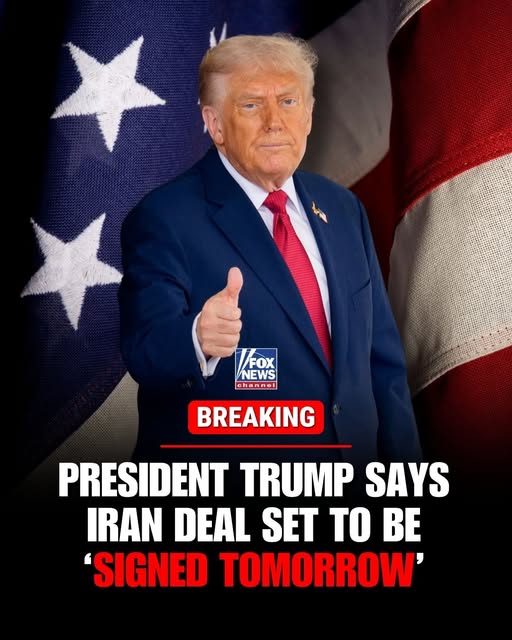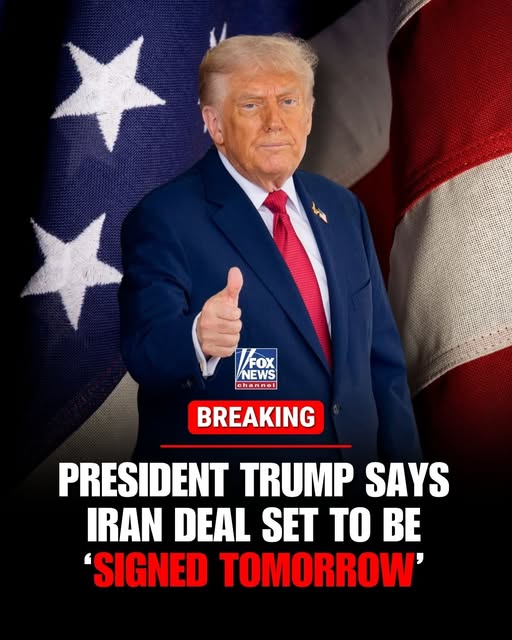
In a groundbreaking development that has sent shockwaves through international diplomatic circles, President Donald Trump has announced that a significant agreement with Iran is scheduled to be signed tomorrow. Making the announcement via social media, Trump emphasized the deal’s potential to reshape regional security and restore free navigation through the strategic Strait of Hormuz.
“Immediately after it is signed, the Hormuz Strait is OPEN TO ALL,” Trump declared in a social media post, signaling a major shift in U.S.-Iran relations and global efforts to stabilize one of the world’s most critical maritime chokepoints. The Strait of Hormuz, through which approximately 20% of the world’s oil passes, has been a flashpoint for tensions and military confrontations over recent years.
The President detailed that the new agreement aims to prevent Iran from developing nuclear weapons permanently, asserting that it stands in stark contrast to the Obama-era nuclear deal. “This is the exact opposite of the previous deal,” Trump said, highlighting promises to ensure Iran cannot resume nuclear enrichment activities that threaten regional security.
Notably, Trump clarified that no money will exchange hands under this new accord—an aspect seen as a strategic move to satisfy critics concerned over extensive financial transactions with Iran. The deal reportedly involves commitments from Iran related to its nuclear activities, but without significant economic sanctions relief or direct financial incentives, ensuring a different approach from the 2015 Joint Comprehensive Plan of Action (JCPOA).
Despite the optimistic outlook, the President warned that if negotiations or the signing process falters, the United States maintains “the ultimate alternative.” While he did not specify what that entails, experts interpret his words as a warning of the potential for renewed sanctions, military posturing, or other measures if diplomacy breaks down.
The announcement has already sparked a flurry of reactions from global leaders and analysts, many of whom view this potential agreement as a pivotal moment in Middle Eastern geopolitics. Supporters argue it offers a peaceful pathway to curb Iran’s nuclear ambitions while ensuring regional stability, particularly with the renewed promise of open navigation through the Strait of Hormuz.
Meanwhile, critics remain cautious, emphasizing the need for transparency and broader international consensus. The deal’s details are expected to be unveiled as negotiations internally prepare for formal signing, with many awaiting further clarification on its scope and enforcement mechanisms.
This developing story underscores a tense yet potentially transformative chapter in U.S.-Iran relations, with the eyes of the world watching as the historic agreement edges closer to realization. If successful, it could redefine regional security, energy markets, and diplomatic engagement in the Middle East.
Where to Learn More
- Reuters: Trump announces breakthrough Iran deal that promises to prevent nuclear proliferation – Reuters
- BBC News: Key details emerge as US set to sign Iran agreement – BBC
- CNN: Analysis on the implications of Trump’s Iran deal announcement – CNN
- Foreign Policy: The strategic impact of the upcoming Iran agreement – Foreign Policy