
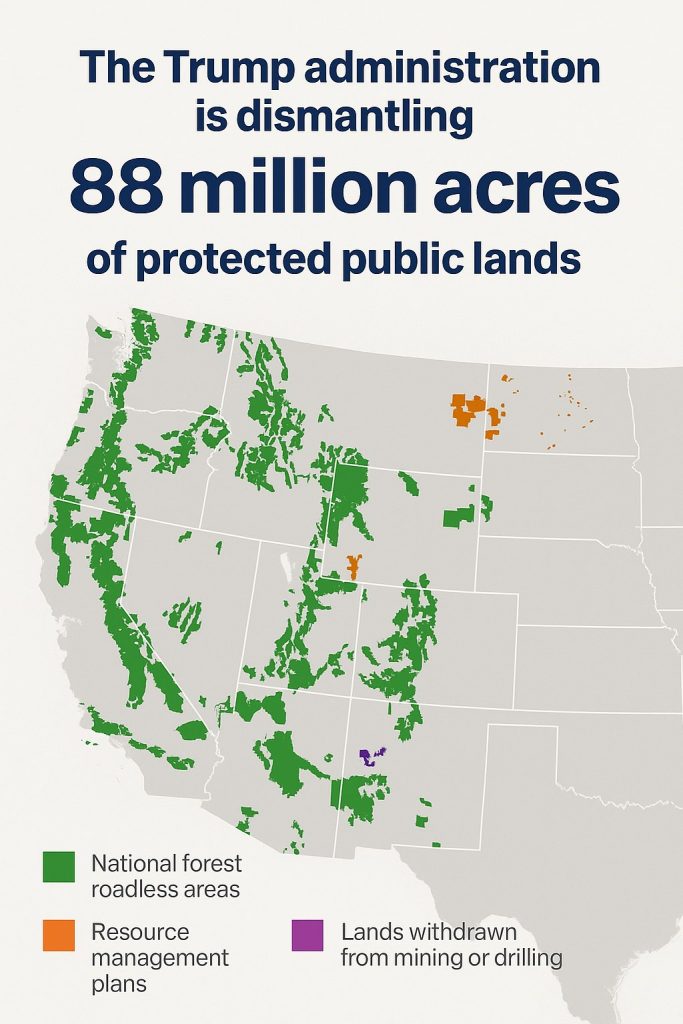
The Trump administration’s recent environmental policy shifts have sparked outrage and concern among conservationists and environmental advocates as they undermine critical protections for about 88 million acres of public lands across the United States. In a move that could have wide-ranging consequences, the rollbacks could affect an alarming total of more than 175 million acres of land when factoring in wildlife habitat protections on both public and private territories.
Environmental watchdogs warn that the dismantling of these protections is not merely an administrative change but a significant risk to biodiversity and ecosystems nationwide. Specifically, a map released detailing the areas affected indicates substantial swathes of land in the western United States marked in vibrant green, orange, and purple, signalling the impending changes to public land protections.
Approximately 88 million acres, which are home to a plethora of wildlife species, are poised to lose their federally mandated protections. This area is larger than the combined size of states like California, Florida, and Georgia. Critics argue that such rollbacks could pave the way for increased development, habitat destruction, and environmental degradation.
For many, this news comes as a harsh reminder of the ongoing battle between conservation efforts and economic ambitions. The lands affected span national parks, forests, and reserves that serve as sanctuaries for countless species, some of which are already endangered or threatened. The implications of these changes extend beyond just flora and fauna; they also pose risks for the natural beauty and recreational opportunities these lands provide to millions of Americans each year.
The dismantling of protections has not gone unnoticed by public figures. Environmental organizations have launched campaigns to raise awareness and rally opposition against the rollbacks. Prominent voices in science and conservation, including biologists and ecologists, have urged for the reinstatement of the protections to preserve the country’s natural heritage and sustain biodiversity for future generations.
In addition to the ecological impact, the policy changes stoke fears regarding climate change as forests and wetlands play crucial roles in carbon sequestration. Cutting back protections on such vital ecosystems could further exacerbate the already pressing issues of global warming and habitat loss.
As opposition mounts, advocates are calling for public engagement. “We cannot allow our precious wildlife and natural resources to be sacrificed in the name of short-sighted economic interests,” a spokesperson for the Sierra Club stated. “If we act now, we can protect these lands for future generations.”
The decision also reflects a broader trend in federal policy under the Trump administration, which has been characterized by prioritizing industrialization over conservation. As debate heats up over energy sources, land rights, and environmental stewardship, the ramifications of these rollbacks will likely dominate discussions in the upcoming election cycle.
In closing, whether you are an outdoor enthusiast, an environmental advocate, or simply someone who appreciates the natural world, it’s crucial to stay informed about the ongoing changes affecting our public lands. The fight to protect these vital areas is far from over, and mobilizing support at local, state, and national levels may play a pivotal role in the future of the landscape.
Where to Learn More
- 88 Million Acres at Risk – Sierra Club – Sierra Club
- Trump Administration’s Move to Roll Back Land Protections – New York Times – NYTimes
- The Impact of Public Land Rollbacks – National Wildlife Federation – National Wildlife Federation
- Environmental Groups React to Rollback of Public Land Protections – NPR – NPR