
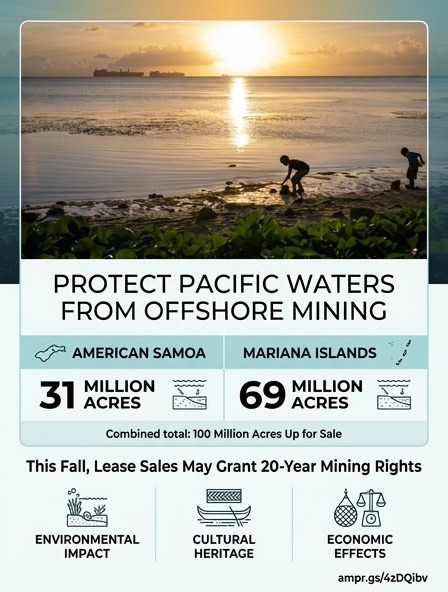
The Trump administration is set to unlock a staggering 100 million acres of federal waters near American Samoa and the Mariana Islands this fall, opening these potentially lucrative seabed regions to bidding by oil, gas, and mineral companies. This unprecedented move aims to extend the U.S. government’s offshore leasing efforts deep into remote Pacific waters, but it raises serious concerns from environmentalists, indigenous communities, and local residents.
Under the new plan, 31 million acres of federal waters near American Samoa and 69 million acres near the Mariana Islands will be made available for lease sales — the first step in allowing private companies to explore, drill, and extract resources from areas that have historically been protected or left untouched. The lease sales could grant mining and energy firms control over these vast seabeds for the next 20 years, fueling speculation about the economic benefits but also igniting fears over environmental degradation and cultural disrespect.
Environmental advocates warn that opening these waters could threaten delicate marine ecosystems that support rich biodiversity, including coral reefs, endemic fish species, and vibrant aquatic life. The Pacific region is known for its complex and fragile coral systems, which are already under stress from climate change, pollution, and overfishing. Extractive activities such as deep-sea mining and offshore drilling could cause irreversible damage, potentially destroying habitats that sustain local economies dependent on fishing and tourism.
Local communities, particularly indigenous groups in American Samoa and the Mariana Islands, voice strong opposition to the plan. Many argue that the waters are not only environmentally vital but also culturally sacred, integral to their traditions and livelihoods. “This is our homeland,” said a spokesperson from the American Samoa Cultural Council. “Allowing corporate interests to drill in our waters disregards our heritage and the sustainability of our future generations.”
The U.S. government contends that the lease sales will stimulate economic growth, create jobs, and bolster energy independence. However, critics question whether the projected economic gains outweigh the environmental risks and the social costs inflicted upon native populations. Moreover, the move comes amid ongoing debates over the pace and scope of offshore resource development, amid growing calls for renewable energy investments and environmental conservation.
This initiative marks a significant shift in U.S. maritime policy, signaling a renewed emphasis on resource extraction in U.S. waters, particularly in remote and ecologically sensitive areas. As the fall lease sales approach, all eyes are on how this decision will shape Pacific ecosystems, influence regional geopolitics, and impact the communities that call these waters home.
Where to Learn More
- U.S. to Offer Massive Ocean Tracts Near Pacific Islands for Offshore Drilling – Associated Press
- Protecting Pacific Ocean Ecosystems from Offshore Oil Drilling – National Geographic
- The Cultural and Environmental Stakes of Pacific Ocean Resource Exploitation – SOMA Magazine
- Official White House Statement on Offshore Leasing Plans