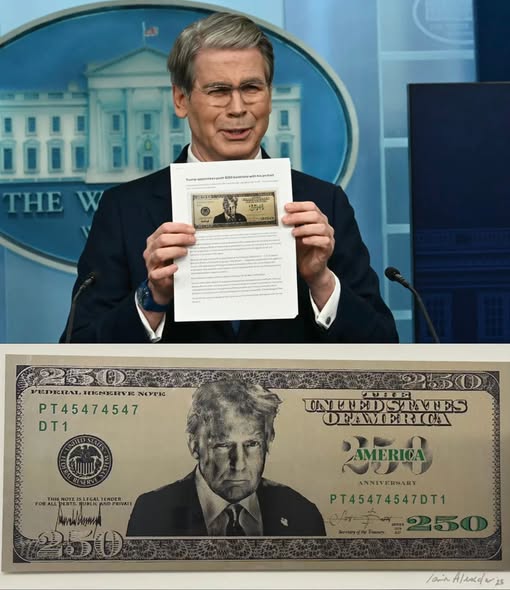
The Department of the Treasury has removed Patricia Solimene, the agency’s first female director of the Bureau of Engraving and Printing, amid controversy over plans to feature a living person—then-President Donald Trump—on a new $250 bill. The move follows her refusal to expedite the design featuring Trump’s portrait before Congress had even authorized such a change, shining a spotlight on authority, law, and the symbolic power of currency in America.
Patricia Solimene, a 24-year Army veteran and respected public servant, stood firm against undue political pressure from Trump appointees Brandon Beach and aide Mike Brown. Despite their push to quickly produce a bill with Trump’s face—an unprecedented move in over 150 years—Solimene insisted on adhering to established legal protocols. Her refusal to violate laws and her commitment to “follow the law” apparently made her a target.
Sources confirm that Solimene was reassigned against her will, with Mike Brown now effectively overseeing the bureau. Critics argue this dismisses a career public servant’s integrity in favor of political expediency. Experts note that the drive to feature a living person on U.S. currency violates longstanding tradition—Congress explicitly barred such representations in 1866 after a Treasury official emblazoned his face on currency. The Founders considered monarchy and regal imagery un-American, rooted in the revolutionary rejection of kings and tyranny.
Despite the law, the Trump administration has been aggressively capitalizing on the symbolism, with Trump’s signature already prominent on all newly printed currency. His likeness also adorns banners over the Justice Department, and his name has been attached to numerous institutions—Kennedy Center, U.S. Institute of Peace, and various passes and coins—all portraying the President’s image as a fixture of national identity.
House Minority Leader Hakeem Jeffries publicly condemned the effort, stating: “Hard No on a Trump $250 bill. Get over yourself. The upcoming July 4th anniversary is not about a wannabe King.” The comment underscores the broader concern that such displays threaten the foundational American principles of liberty, where monarchy and overreach have historically been rejected.
Historically, currency has been a symbol of national ideals, not personal glorification. The Founders’ rejection of monarchy was rooted in the desire for a republic—where power is derived from the people, not individual leaders. The current push to elevate Trump’s image on money and institutions signifies a troubling departure from those ideals, raising questions about the influence of personality cults in government.
This episode highlights a broader debate about the role of symbolism, law, and accountability in American democracy. As the treacherous line between admiration and authoritarianism becomes clearer, many wonder whether the nation is losing sight of its core values—highlighted starkly by the firing of a dedicated public servant over doing the right thing.