
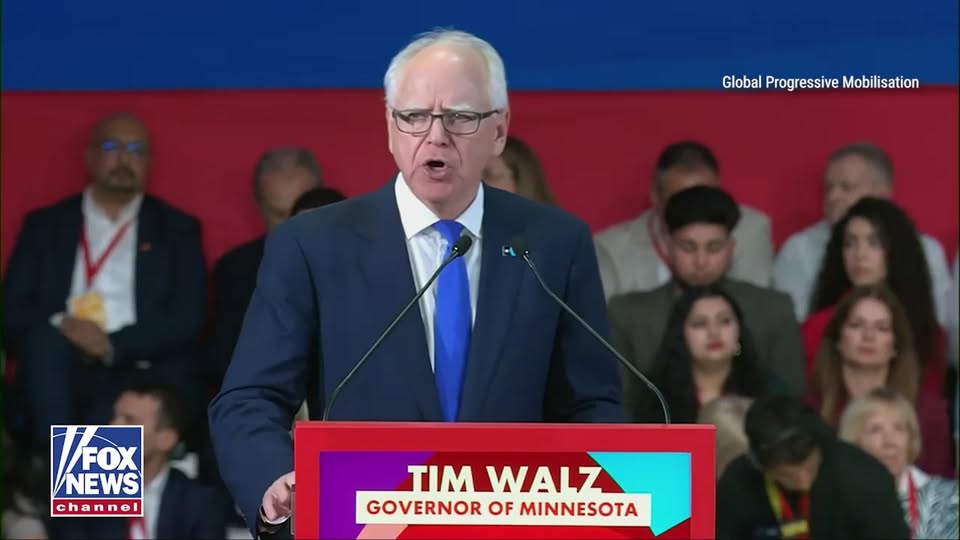
In a fiery speech that has quickly gained traction across social media platforms, Minnesota Governor Tim Walz didn’t hold back in his critique of the current administration’s foreign policy. Calling the president’s recent decisions “feeble-minded” and “trigger-happy,” Walz accused the leadership of recklessly plunging the nation into a war he describes as unnecessary and ill-conceived.
“We’ve got a feeble-minded, trigger-happy president who plunged us into a war where no threat was present, with no clear objectives and no exit plan,” Walz declared during a recent press conference. His statements have ignited widespread debate, with many analysts and citizens questioning the justification for the military actions taken in recent months.
Walz’s comments come amid growing frustration over the administration’s handling of foreign conflicts. Critics argue that the decision to involve the U.S. in new military engagements has been hasty, lacking strategic clarity, and driven by volatile leadership rather than well-defined national interests. The governor’s strong language underscores the deepening divisions over the country’s foreign policy trajectory.
Adding to the controversy, Walz explicitly labeled the current approach as “fascism”—a provocative term that has prompted both support and backlash. He explained, “When a government acts without clear objectives, disregards diplomatic solutions, and opts for aggressive military escalation, it veers dangerously close to the authoritarian tactics that fascism embodies.“
This bold critique reflects a broader concern among many Americans who feel that recent military decisions undermine democratic principles and endanger national security. Critics argue that the lack of transparency and the absence of an exit strategy exacerbate fears of prolonged conflict and unintended consequences.
While the president and his defenders maintain that military action was necessary for national security and regional stability, Walz’s comments highlight growing bipartisan frustrations. His vocal opposition signals an increased call for accountability and a reassessment of current foreign policy strategies.
As this debate unfolds, many are watching to see whether Walz’s words will influence policymakers or spark a larger movement toward reevaluating military involvement abroad. Whether this marks a turning point or a passing critique remains to be seen, but it undeniably adds a new level of intensity to the national discourse.
Where to Learn More
- Tim Walz Criticizes U.S. War Decision as ‘Fascism’ – The New York Times
- Minnesota Governor Labels Military Action as Dangerous ‘Fascism’ – Washington Post
- Tim Walz Slams President’s War Approach, Calls It ‘Feeble-minded’ – CNN
- Political Analysts Respond to Walz’s Controversial Remarks on War – MSNBC