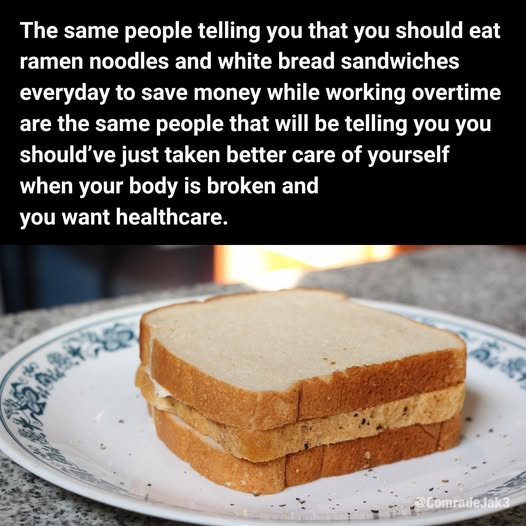
In the era of soaring living costs and demanding work schedules, it’s common to hear advice telling people to cut costs by opting for inexpensive staples like ramen noodles and white bread sandwiches. Social media is flooded with tips encouraging workers to save money at the expense of nutritional quality, often framing such choices as necessary and practical. But a viral image has raised an important question: who is really benefiting from this advice?
The image circulating online features a simple but striking comparison: a loaf of wholesome rye bread alongside a plate of ramen noodles, accompanied by the caption, “The same people telling you to eat ramen noodles and white bread sandwiches every day to save money are the same people who don’t care about your health.” This stark statement exposes a troubling disconnect between the financial advice often handed out by influential voices—and the long-term health consequences of such advice.
Many workers, especially those juggling demanding jobs and multiple responsibilities, face tough choices when it comes to nutrition. The allure of cheap, easy-to-prepare foods like instant ramen and white bread sandwiches offers short-term relief for shrinking budgets. These foods are calorie-dense, inexpensive, and readily available. However, they are also nutrient-poor, lacking in essential vitamins, minerals, and fiber, which are vital for maintaining overall health.
Experts warn that consistently choosing processed and refined foods can contribute to various health issues, including obesity, diabetes, cardiovascular disease, and gastrointestinal problems. The irony is that while these foods may help save money in the immediate term, they often lead to higher healthcare costs down the line, exacerbating financial struggles rather than alleviating them.
A growing movement advocates for better nutritional education and accessible healthy food options for low-income and overworked populations. Community initiatives, government programs, and advocacy groups are working to bridge the gap between affordability and nutrition, emphasizing that eating healthily doesn’t have to be cost-prohibitive.
The viral social media post’s sobering message shines a light on the manipulative nature of some financial advice from powerful interests who benefit from a lack of consumer awareness. It challenges consumers to question who really profits from their choices and urges individuals to prioritize their health even amidst economic hardship.
Ultimately, the image serves as a reminder that cheap isn’t always better, especially when it comes to health. Making informed choices about nutrition is crucial, and societal systems should support healthier options for everyone, regardless of income.