
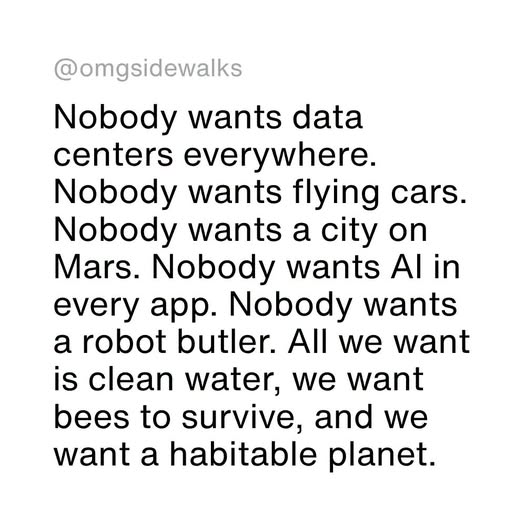
In today’s fast-paced tech landscape, there’s a constant buzz about groundbreaking innovations like data centers sprawling across the countryside, flying cars zipping through city skies, colonies on Mars, and AI-driven robots transforming every aspect of our lives. However, a recent social media post from @omgsidewalks cuts through the hype, echoing a sentiment that many are quietly feeling: nobody truly wants every inch of our world saturated with these technologies.
The viral image, featuring a simple map and a bold statement, underscores a growing skepticism surrounding the relentless push for technological omnipresence. The message is clear: society is increasingly questioning whether these sci-fi visions are genuinely desirable or just the latest obsession fueled by corporate hype and media sensationalism.
Why the backlash? Many experts and everyday citizens are voicing concerns about sustainability, privacy, and quality of life. For example, the idea of ubiquitous data centers, while essential for cloud computing and digital services, often comes at the cost of environmental impact, energy consumption, and land use. The promise of flying cars has long been a staple of futurism, yet practical challenges like safety, regulation, and infrastructure have kept them from becoming commonplace — not to mention the environmental costs of such vehicles.
Similarly, colonizing Mars has moved from the realm of science fiction to serious discussion, with companies like SpaceX making progress. Nonetheless, critics argue that focusing on extraterrestrial settlement may distract from urgent issues here on Earth, such as climate change, poverty, and biodiversity loss. The idea of every app being integrated into our daily lives can feel invasive, raising questions about data privacy, surveillance, and digital addiction.
This social media sentiment invites us to reflect: Should technological progress serve all of humanity, or are we heading toward a world where our daily environments are increasingly dictated by artificial constructs and high-tech ambitions that many of us don’t actually want? It’s a call to prioritize what truly enhances human wellbeing, rather than chasing after the next big shiny object.
As the debate continues, the message from @omgsidewalks taps into a broader cultural shift — a desire for simplicity, sustainability, and authentic human experiences. It reminds innovators, policymakers, and consumers alike to critically evaluate the true value of these technological visions before automating and extending them into every facet of life.
Where to Learn More
- Are Flying Cars Actually Coming? Perspectives and Challenges – Wired
- Environmental Impacts of Data Centers and Cloud Computing – Nature Sustainability
- The Mars Colony Debate: Dreams or Distraction? – Space.com
- Why Ubiquitous Tech Might Be Going Too Far – TechCrunch
- The Pandemic of Unnecessary Apps and Digital Overload – The Atlantic