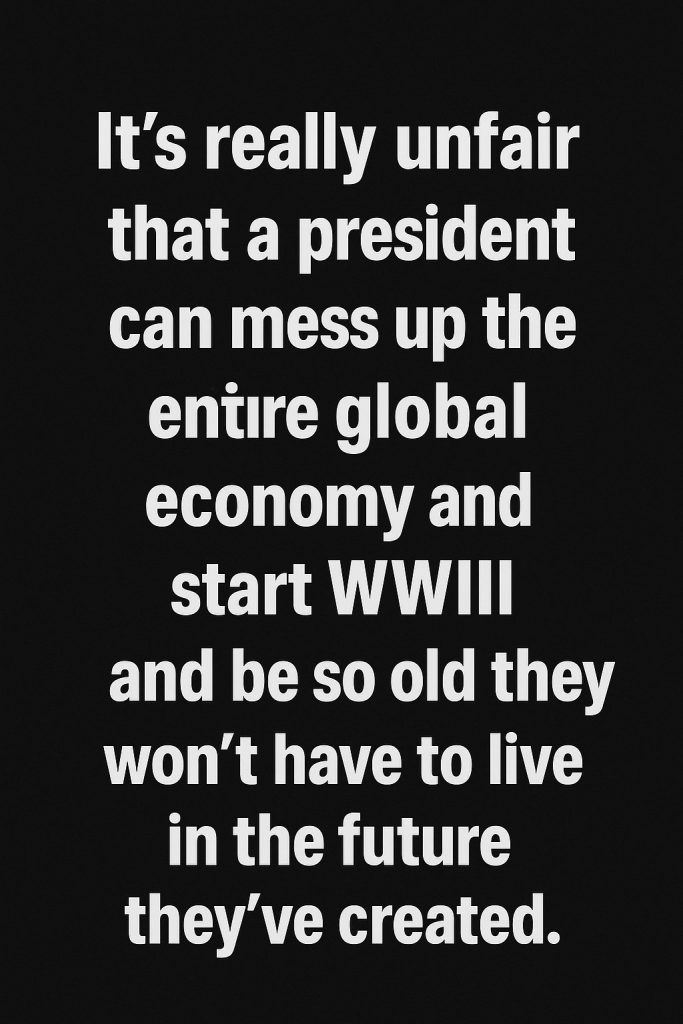
In a poignant and blunt expression that has captured the attention of social media users worldwide, a viral message lamented the profound inequality and frustration many feel in today’s global political landscape. The message, which rapidly circulated across platforms, states, “It’s really fucking unfair that a president can fuck up the entire global economy and start WWIII and be so old they won’t have to live in the future they’ve created.”
This raw sentiment reflects a broader anxiety about the decisions made by some of the world’s most powerful individuals—often aging leaders—who hold sway over economies, diplomacy, and even the fragility of international peace. The outcry is fueled by a mix of political disillusionment, fears of economic instability, and the looming specter of major global conflicts potentially triggered by these leaders’ policies and actions.
Age and Power: A Double-Edged Sword?
Many presidents and prime ministers of powerful nations are among the oldest in modern history. For instance, recent years have seen leaders well into their 70s and 80s steering the course of worldwide affairs. Critics argue that this significant age gap distances them from the future generations that will inherit both the challenges and consequences of their leadership. From climate change impacts to economic debt burdens, the future is the legacy of today’s decisions.
This discrepancy raises ethical questions about accountability, foresight, and empathy. How can a world shaped by leadership decades older than much of the population hope to thrive? And what mechanisms exist to hold these leaders responsible—not just politically but morally—for decisions that could destabilize entire regions or economies?
The Global Economy and the Risks of Conflict
Economic volatility is often cited as a top concern linked to leadership decisions. Trade wars, sanctions, military expenditures, and fluctuating currency markets all feel the ripple effects of political choices. When tensions escalate, so does uncertainty, which deeply affects global markets and everyday livelihoods. Moreover, the fear of conflict escalation, potentially leading to a major war, amplifies public anxiety.
Social media’s viral statement captures this collective frustration succinctly: many feel powerless in the face of decisions with consequences far beyond their control, made by individuals who, quite literally, will not live long enough to experience the fallout firsthand.
Intergenerational Responsibility and Reform
There is growing advocacy from younger generations for structural reforms that limit unchecked power and improve representation of youth and marginalized voices in governance. Movements pushing for term limits, age caps, or greater transparency hope to rebalance political power. The viral outrage is not only a call for accountability but also for systemic change that ensures the future is crafted by those who will live in it.
Ultimately, the viral message underscores a universal demand: that leadership should be as much about stewardship and foresight as about power. It resonates because it encapsulates a fear shared globally—that the architects of our future must be invested in it personally, emotionally, and with a genuine awareness of their legacy.
Where to Learn More
- The Age of World Leaders Is Increasing: What Does It Mean? – Brookings Institution
- Understanding Global Economic Risks – Council on Foreign Relations
- Why Young People Are Crucial in Local and Global Decision-Making – United Nations Chronicle
- Inherited Crises and Political Leadership: Who Will Own the Future? – The Atlantic