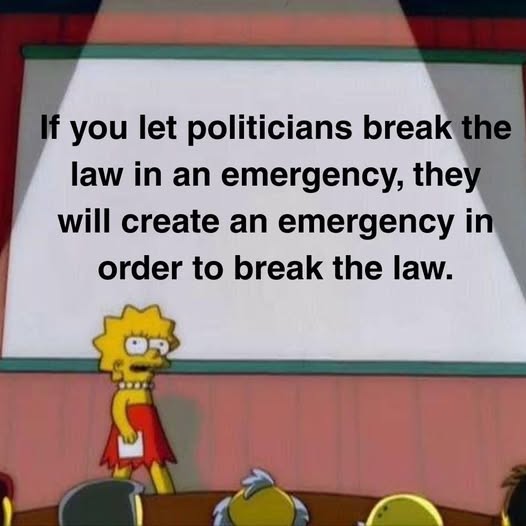
In an era marked by frequent crises—from natural disasters to geopolitical conflicts—there’s an increasing wariness about how governments leverage emergencies to expand their powers. A viral social media message succinctly captures this concern with the provocative statement: “If you let politicians break the law in an emergency, they will create an emergency in order to break the law.”
This sentiment resonates deeply in today’s political landscape, where emergency declarations often set the stage for controversial policies. Historically, leaders have occasionally justified extraordinary measures during crises, citing necessity and national security. However, critics warn that such actions can quickly erode democratic norms if unchecked.
The core issue lies in the delicate balance between swift government action and safeguarding civil liberties. When laws are bypassed or suspension of legal procedures are enacted under the guise of necessity, it raises questions about accountability. Once a government begins to break or alter the rules during crises, it risks normalizing the abuse of power, which can persist long after the situation stabilizes.
Experts argue that the danger isn’t just theoretical. They point to instances where crises have been exploited to justify authoritarian measures. For example, during past emergencies—whether pandemics, terrorism threats, or economic upheavals—some administrations have extended surveillance powers, detained dissenters, or enacted legislation that would otherwise be unacceptable.
Additionally, the sentiment behind the social media message highlights a troubling cycle: the idea that crises can be intentionally manufactured or exploited to justify illegal or unconstitutional actions. This suspicion fuels ongoing debates about transparency and oversight. Citizens and watchdog groups are increasingly calling for clear boundaries and accountability to prevent abuses.
To mitigate these risks, many democracies have established independent oversight bodies, legal frameworks, and sunset clauses that limit emergency powers. However, the effectiveness of these safeguards depends on vigilant civic engagement and political will to uphold democratic principles, even in the face of imminent threats.
The viral message serves as a stark reminder: allowing politicians to break the law during emergencies may seem justified at the moment, but history warns that such allowances can be exploited to entrench power and undermine the rule of law. Citizens must remain alert and advocate for transparent governance, ensuring that emergency measures do not become tools for permanent authoritarianism.