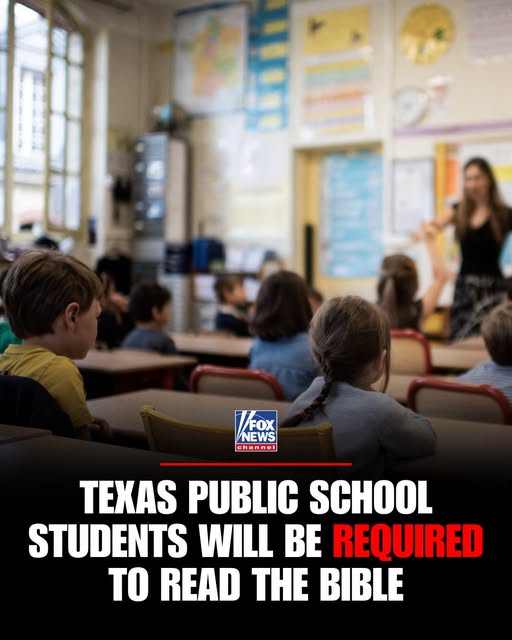
The Texas State Board of Education has taken a decisive and controversial step, voting 9-5 to incorporate passages from the Bible into the required reading list for public school students. The move, set to go into effect for elementary students beginning with the 2030-31 school year, has ignited a fiery debate about the role of religion in public education and the boundaries of church-state separation.
The decision comes after weeks of heated discussion among board members, with supporters emphasizing the significance of Judeo-Christian traditions in shaping American history and culture. “Our nation’s founding principles are rooted in these traditions,” said one supporter during the meeting. “Including the Bible in the curriculum acknowledges that reality and honors our heritage.”
Opponents, however, are raising serious concerns about the move. Critics argue that including religious texts in public school curricula risks elevating Christianity above other faiths and violates the constitutional principle of separation of church and state. “This is a dangerous precedent that could lead to favoritism of one religion over others,” stated one opponent. “Public schools should remain neutral, not promote specific religious beliefs.”
The new curriculum will require elementary students to read selected passages from the Bible, though specifics about the texts or the pedagogical approach remain under discussion. Proponents assert that this inclusion will foster a better understanding of Western civilization’s moral and cultural foundations, while critics warn it could alienate students from non-Christian backgrounds and infringe upon religious freedoms.
This decision comes amid ongoing national debates regarding religion in public spaces and education. Opponents also highlight potential legal challenges, citing past Supreme Court rulings that have clarified the separation between church and state. Legal experts have warned that poorly implemented religious curricula might provoke lawsuits, potentially leading to costly court battles.
With the new policy scheduled to start in the upcoming school year, educators and parents across Texas are voicing mixed reactions. Some see the move as a way to reinforce cultural identity and shared history, while others worry about how it aligns with constitutional values and educational neutrality.
As the debate continues to unfold, many are watching closely to see how this decision will influence other states and the broader national conversation about religion’s role in public education. Courts, advocacy groups, and legislators are likely to weigh in as the implementation date approaches.
Where to Learn More
- Texas Board Approves Bible-Reading Requirement in Public Schools – Texas Tribune
- Debate Over Religion in Texas Schools Gains Momentum – NPR
- ACLU Comments on Texas Education Board’s Religious Curriculum Decision – American Civil Liberties Union
- Legal Experts Warn of Challenges to Texas Bible Curriculum – CNN