
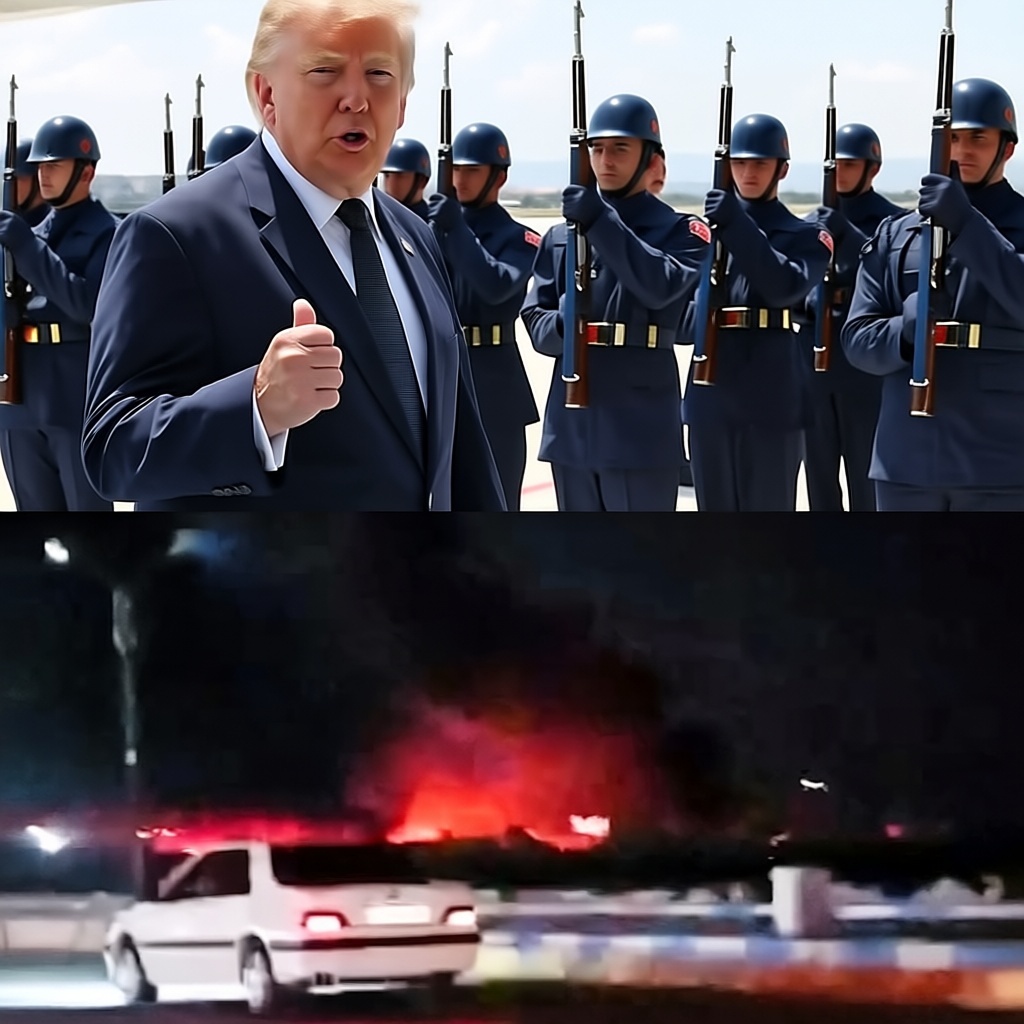
In a dramatic escalation of Middle Eastern tensions, the United States launched overnight airstrikes against Iranian coastal targets in Hormozgan and Mahshahr, prompting swift retaliation from Iran’s Revolutionary Guards. The exchanges mark a sharp departure from recent diplomatic overtures and threaten to ignite a broader regional conflict.
According to sources, U.S. warplanes targeted key locations along Iran’s coast, aiming to weaken Iran’s military capabilities in the Persian Gulf. In retaliation, Iran deployed drones and missile attacks against American interests in the Gulf region, striking the Salman Port installation in Bahrain and the Ali Al Salem Air Base in Kuwait. Sirens sounded thrice in Bahrain since sunrise, signaling the seriousness of the mutiny, while oil prices soared over five percent within an hour of President Trump’s inflammatory remarks.
The volatile situation has reverberated across global markets. The Indian stock market’s Sensex plummeted by 1,600 points, reflecting widespread investor concern. Meanwhile, oil prices surged, adding further strain to a global economy already grappling with inflation and geopolitical instability.
What makes this escalation even more startling is the political context. Just three weeks ago, the same “sick” Iranian government was a centerpiece of diplomatic negotiations. In a surprising turn of events, President Trump publicly dismissed Iran as a “cancer” that must be “cut out early,” describing them as “liars” and “cuckoo.” Previously, he seemed to be on a different footing, having signed the Islamabad Memorandum of Understanding at Versailles on June 17, a deal that promised Tehran a $300 billion reconstruction fund and an eventual reopening of the Strait of Hormuz.
Experts note that the sudden shift in rhetoric reflects a volatile approach to Middle Eastern diplomacy. Trump’s administration called the Iranian regime a threat, citing previous negotiations as futile and dismissing the possibility of diplomacy. “Negotiating was just a waste of time dealing with them,” he declared recently.
Despite international hopes for de-escalation, the recent hostilities signal a grim reality: the peace deal that once seemed within reach has crumbled in just three weeks. The U.S. military presence in the Gulf is now on high alert, with American service members avoiding drone threats while tankers burn in flames. The potential for wider conflict has rattled global markets and heightened fears of a resurgence of Middle Eastern instability.
European diplomatic efforts, led by EU top diplomat Kaja Kallas, are underway to salvage what remains of the Iran nuclear deal. She is convening Gulf ministers to discuss urgent measures to prevent further escalation, but the outlook remains uncertain. As the world watches, the man known for “The Art of the Deal” has managed to dissolve a fragile accord in less than a month, plunging the region—and potentially the world—into chaos.