
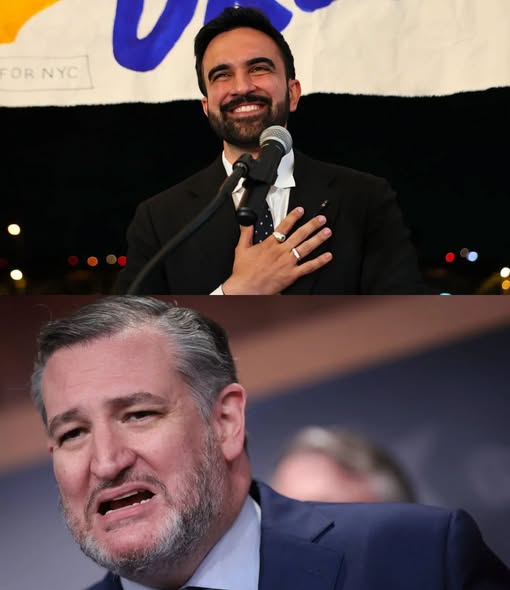
As a record-breaking heat dome settles over the East Coast this holiday weekend, with temperatures soaring into the triple digits in New York City, the importance of a reliable power grid has never been more apparent. Amid warnings to manage energy consumption to prevent blackouts, critics have pointed out a glaring double standard in political reactions—highlighting Texas Senator Ted Cruz’s recent comments and actions.
On Wednesday, New York City Mayor Eric Adams urged residents and businesses to keep their air conditioning set at a modest 78°F, unplug unused devices, and cooperate with Con Edison’s requests to ease the strain on the grid. His call was straightforward: A simple, civic-minded effort to maintain power and prevent disaster as temperatures soar. The response was largely positive, with many understanding that such practical steps can make a real difference in avoiding widespread outages that threaten the lives of the most vulnerable—elderly, sick, and lonely residents who suffer the most without air conditioning.
However, this commonsense advice from New York’s leadership did not sit well with many in the GOP. Republican senators and governors condemned what they called “socialist” or “communist” policies, framing energy conservation as government overreach. Leading the charge was Senator Ted Cruz, who took to social media to mock the city’s safety measures, famously saying, “In a first-world country, you could turn on the A/C.”
What Cruz conveniently left out was the fact that Texas has historically advised its residents to keep air conditioning at similar levels. In 2015, then-Governor Greg Abbott recommended Texans set thermostats to at least 78°F during heat waves. Moreover, during the 2022 heat emergency, Texas grid operators warned the public that lowering thermostats eases demand and helps prevent blackouts—the very advice Cruz dismisses as government meddling.
To understand the gravity of Texas’s energy history, one must recall February 2021, when a brutal winter storm caused the Texas power grid to collapse. Millions were left in the dark and cold for days, with some residents resorting to burning furniture for warmth. Officially, at least 246 people died in what was one of the worst blackouts in U.S. history. Cruz’s response? A quick flight to Cancún—while his constituents froze. When caught in the act, Cruz claimed the trip was because his daughters wanted to go on vacation, sparking widespread criticism for his lack of empathy and leadership.
Adding to the irony is the fact that even the federal government’s Energy Department recommended in recent times that homeowners keep their thermostats at 75–78°F during summer heatwaves—advice now vanished from the department’s website after being highlighted by critics. The message was quietly removed amid the political fallout, demonstrating how climate and energy policies have become battlegrounds for partisan agendas.
Meanwhile, resilient city officials like New York’s Mayor Adams continue to urge practical conservation efforts to protect critical infrastructure and vulnerable populations during this heatwave. Zohran Mamdani, a New York State Assembly member, reiterated this message Thursday afternoon, posting the same energy-saving guidelines—78°F and unplugging unused devices—highlighting a stark contrast to Cruz’s dismissive attitude.
As Americans face mounting climate challenges and frequent blackouts, the debate over energy policies, leadership, and responsibility grows fiercer. What’s clear is that in these intense summer days, simple, civic-minded steps can save lives—something political posturing can’t replace.
Where to Learn More
- NYC Officials Urge Conservation to Prevent Blackouts During Heatwave – The New York Times
- Ted Cruz Flies to Cancún During Texas Blackout Amid Cold Crisis – NBC News
- How to Keep Your Home Cool During the Summer Heat – U.S. Department of Energy
- Texas Energy Grid Crisis of 2022 and Lessons Learned – Axios