
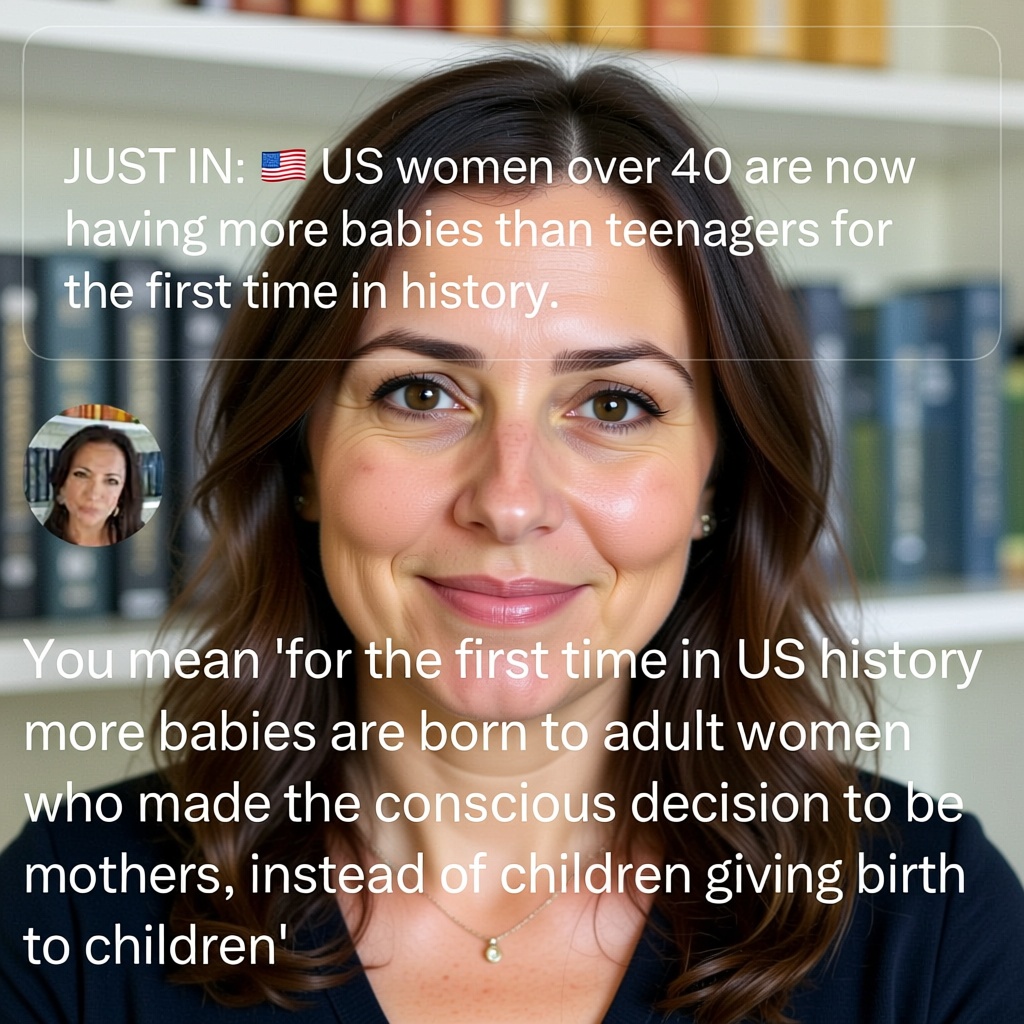
In a remarkable demographic shift, recent data indicates that for the first time in U.S. history, women over the age of 40 are having more babies than teenagers. This trend, highlighted by social media insights and emerging statistics, signals changing reproductive patterns and evolving societal norms surrounding motherhood and family planning.
The viral social media post, initially shared by remarks @remarks, references a report stating that women aged 40 and above are now surpassing teenagers in childbirth rates. Natali Simmonds, a popular author and social commentator, also echoed this development, emphasizing its significance in the broader context of reproductive health trends.
While teenage pregnancy rates have historically been a concern due to socioeconomic implications and access to healthcare, the current data reflects a decline in adolescent births. Conversely, an uptick in pregnancies among women in their 40s may be linked to various factors, including advancements in reproductive technology, delayed childbearing due to career or personal reasons, and increasing acceptance of later motherhood.
Medical experts note that women over 40 are increasingly opting for fertility treatments such as in-vitro fertilization (IVF), which have improved success rates over recent years. Additionally, societal shifts have led to more women choosing to have children later in life, balancing career aspirations and personal development before starting families.
This demographic change raises important public health and social questions. Healthcare providers are urging women to be aware of the potential risks associated with pregnancy at an older age, such as gestational diabetes, hypertension, and higher rates of certain genetic conditions. However, many women report that with proper medical support, later pregnancies are increasingly safe and fulfilling.
The phenomenon also highlights broader social trends, including increased educational attainment, workforce participation among women, and changing attitudes toward motherhood. Experts suggest that these factors, combined with technological advances, are reshaping traditional timelines of motherhood.
As the data continues to evolve, policymakers and healthcare institutions are encouraged to adapt their strategies to support this shifting demographic, ensuring that women of all ages receive appropriate prenatal care and resources.
In conclusion, the rise of pregnancies among women over 40 not only reflects changing societal norms but also underscores the importance of accessible reproductive healthcare and education. This historic milestone marks a new chapter in demographic patterns that could influence family structures, healthcare policies, and societal perceptions of motherhood for years to come.