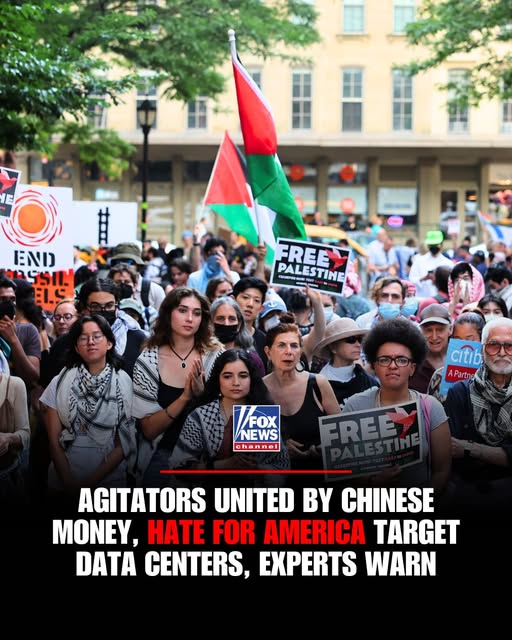
In recent months, a troubling alliance of activist groups across the United States has surfaced, raising alarms among national security experts and policy analysts. These collectives, often associated with anti-Israel demonstrations, climate protests, and communist sympathies, are increasingly unified by a shared anti-American sentiment and reportedly some funding originating from covert Chinese sources.
Fox News Digital has uncovered a pattern of coordinated protests featuring the same groups marching side-by-side in various cities nationwide. Many protests focus on opposing the development of new AI data centers, citing environmental concerns and fears over energy consumption. However, experts warn that these seemingly disparate movements are part of a broader effort to destabilize key American technological and industrial infrastructure.
“What all of these protests have in common,” said Zineb Riboua, a fellow at the Hudson Institute, “is that anti-American trend within them, often driven by foreign funding networks seeking to weaken U.S. resilience and technological superiority.”
Investigators point to the influence of Chinese-linked funding networks, which have historically used various domestic and international activist groups to advance strategic interests. While direct links are complex to establish definitively, patterns of funding and organizational overlap suggest a calculated effort to amplify anti-American narratives and disrupt critical infrastructure projects like AI data centers.
Many of these protests have featured banners and slogans that not only oppose AI development but also echo broader geopolitical grievances. Some groups openly express sympathies with communist ideologies or adopt globalist rhetoric that undermines traditional American values. Notably, social media posts have showcased images and messages criticizing U.S. policies, often intertwined with anti-Israel and pro-Palestine statements and other radical slogans. This convergence hints at a sophisticated network working to blur ideological lines for strategic purposes.
Security analysts warn that this coordinated activism poses tangible risks to America’s technological edge. AI and other emerging industries are considered vital to national security, economic prosperity, and global competitiveness. Disruptions or delays driven by protests could give adversaries an opening to gain ground.
Furthermore, experts emphasize the importance of vigilance in discerning genuine grassroots movements from orchestrated efforts funded by foreign agents. The presence of foreign money, especially from China, complicates the landscape, making it difficult to distinguish authentic activism from strategic interference.
As these networks continue to evolve, policymakers are called upon to strengthen oversight of foreign funding channels and promote transparency around activist organizations. Addressing the root causes of domestic unrest intertwined with foreign influence is crucial for safeguarding America’s technological future and maintaining national security integrity.