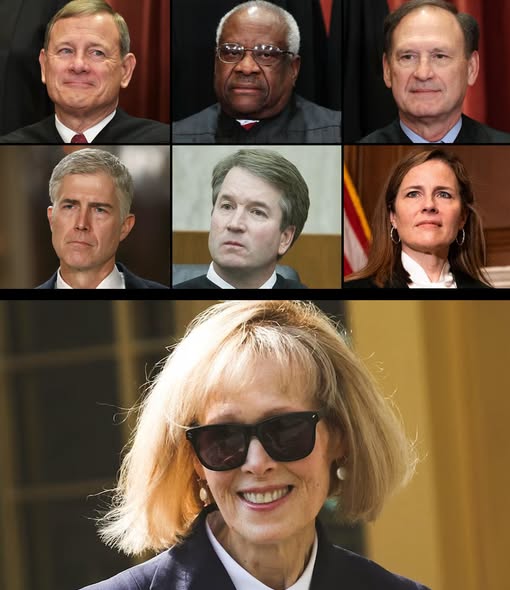
The Supreme Court delivered a strikingly contradictory set of rulings that have ignited widespread concern about the future of American democracy. On one hand, the Court upheld a jury verdict that found former President Donald Trump sexually assaulted and defamed E. Jean Carroll, letting that judgment stand without hearing his appeal. On the other, in a behind-the-scenes decision, the Court quietly tore up a 90-year-old precedent, vastly expanding Trump’s power to control federal agencies — effectively handing him the keys to the entire administrative state.
This judicial move centered on the gutting of Humphrey’s Executor v. United States, a landmark case that historically limited the President’s authority to fire independent federal officials. By doing so, the Court granted Trump the ability to remove key regulators, including Rebecca Slaughter, a Democratic commissioner at the Federal Trade Commission (FTC). The implications go far beyond one woman or one agency; they threaten the independence of institutions like the SEC, FCC, NLRB, and Federal Reserve — agencies specifically designed by Congress to operate free from presidential interference to safeguard markets, labor rights, and the economy itself.
Legal experts and critics warn that this shift erodes vital checks and balances, leaving power concentrated dangerously close to the presidency. “This is not how a democracy with functioning oversight is supposed to work,” said constitutional scholar Laurence Tribe. “It’s more akin to royal prerogative than constitutional governance.”
Justice Sonia Sotomayor’s dissent, joined by Justices Jackson and Kagan, did not shy away from calling out the Court’s double standard. She wrote that “the Court gives the President a power unknown even to the English Crown against which the Founders revolted.” This stark statement underscores how egregiously this ruling elevates presidential authority, making the leader an unchecked monarch rather than a democratically constrained official.
Meanwhile, the ruling to uphold the jury’s finding that Trump sexually assaulted E. Jean Carroll underscores the gravity of his legal troubles, yet it appears to be overshadowed by the broader power grab. The double-edged nature of the Court’s decisions leaves many Americans feeling unsettled — they’ve just watched the judiciary affirm Trump’s accountability in one case, then hand him unchecked authority in another.
It is a sobering moment for democratic governance, as rights and institutions are quietly undermined under the guise of legal consistency. The process leaves many asking: Have the balance of power and accountability really been redefined, or has the Court abdicated its role in safeguarding democracy itself?
Where to Learn More
- Supreme Court Upholds Jury’s Ruling Against Trump but Sails Through Power Expansion – The New York Times
- How the Supreme Court Gutted Decades-Old Precedent to Empower a President – The Washington Post
- Legal Experts Warn of Dangerous Power Shift After Supreme Court Ruling – NPR
- Analysis: The Court’s Surprising Decision to Undermine Democratic Checks – Reuters