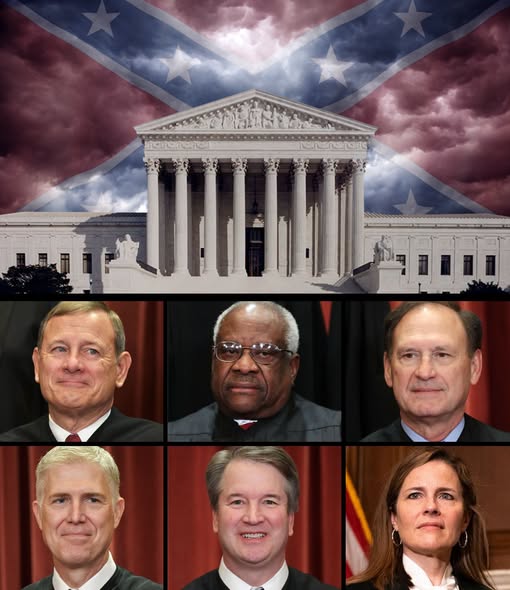
The U.S. Supreme Court delivered a significant blow to immigrant communities last week, ruling in a 6-3 decision along party lines that the federal government can now strip Temporary Protected Status (TPS) from over 350,000 Haitians and thousands of Syrians. Simultaneously, the Court approved policies allowing border agents to turn away asylum seekers before they even reach U.S. soil—effectively shutting the door on many desperate individuals fleeing danger and persecution.
However, what has stirred widespread outrage isn’t just the policy shift but the Court’s blatant effort to sideline its own history of racially charged rhetoric. Justice Elena Kagan, in a powerful dissent, revealed that the conservative majority deliberately refused to quote then-President Donald Trump’s own inflammatory remarks, describing them as “repellent and racially inflected.” Instead, she took it upon herself to explicitly cite Trump’s offensive comments, emphasizing their racist undertones.
In her dissent, Justice Kagan listed Trump’s infamous remarks, including calling Haiti a “shithole country,” alleging Haitians in Ohio were “eating people’s pets,” suggesting Haitians “probably have AIDS,” and claiming they and others were “poisoning the blood” of the nation. Kagan sharply criticized the majority for ignoring these comments, which she described as “shot through with racial stereotypes and tropes,” noting how such language echoes discrimination and prejudice rarely applied to white communities.
While the majority downplayed the racial content, arguing that Trump’s words were not “overtly racial,” Kagan countered that ignoring the racist nature of the language—which is undeniable—serves to whitewash the blatant bias embedded in these statements. She highlighted that the Court’s refusal to directly confront Trump’s words effectively erases the racial context, but her explicit citation ensures these words are permanently part of the record and recognized for their insidious impact.
Legal analysts argue that these rulings represent a continuation of the conservative Court’s pattern of prioritizing restrictionist immigration policies while sidestepping the racial implications that often underpin them. Critics decry the ruling as yet another chapter in a broader judicial strategy that dismisses the harm caused to marginalized communities, effectively enabling a government agenda rooted in xenophobia and racial prejudice.
As the nation grapples with this decision, advocacy groups are vowing to fight back, emphasizing that the language and policies tied to these rulings perpetuate discrimination and undo years of progress towards an inclusive, equitable immigration system. Meanwhile, immigrant rights supporters see this latest move as a stark reminder of the importance of holding policymakers accountable and recognizing the racial undertones that often underpin immigration law.
Where to Learn More
- Supreme Court Ruling Thwarts Immigrants’ Rights While Ignoring Racial Rhetoric – The New York Times
- Analysis: How the Supreme Court sidestepped Trump’s racist language in immigration rulings – Washington Post
- ProPublica: The Racist Rhetoric Behind Trump’s Immigration Policies
- American Civil Liberties Union: Defending immigrant rights in the face of rising restrictions