
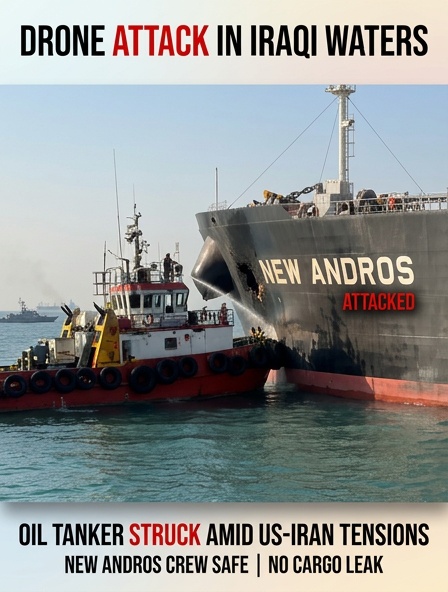
A Lebanese-flagged tanker carrying approximately 2 million barrels of Iraqi fuel oil was struck by a drone early Wednesday morning in Iraqi territorial waters, sparking fears of escalating regional conflict. The incident occurred around 6 a.m., according to officials, and has intensified concerns over the fragile stability in the Persian Gulf amid ongoing US-Iran tensions.
The vessel, the Panama-flagged New Andros, sustained a large hole in its hull, which appears to have resulted from a targeted drone strike. Footage circulating online shows the extensive damage, with flames visible on board following the attack. Fortunately, all 22 crew members onboard were reported safe, and Iraq’s oil ministry confirmed there was no cargo leak—a critical detail that suggests the strike aimed at causing disruption rather than an environmental catastrophe.
The incident unfolds amid a spike in military and maritime activity across the Persian Gulf region. The UK Maritime Trade Operations (UKMTO) has issued alerts indicating that multiple merchant vessels in the northern Gulf and Gulf of Oman have been hit by disabling fires during recent incidents. These events appear interconnected, raising alarms of a coordinated or escalating effort by Iranian-backed forces or other regional actors to disrupt commercial shipping lanes.
Officials from Iraq and international maritime agencies are closely monitoring the situation. The oil ministry stated that the incident did not result in an oil leak, a crucial point considering the potential economic repercussions of such an event, especially in a region where energy supplies are already under global scrutiny. Still, the attack marks a significant escalation in what analysts are calling a “shadow war” in the region, where unmanned aerial systems (UAS) are increasingly being employed as asymmetric weapons with geopolitical implications.
U.S. military officials have not officially claimed responsibility for the strike but have condemned the attack, which comes amid heightened US-Iran diplomatic tensions. The Biden administration has long accused Iran of supporting proxy groups conducting attacks against shipping in the Gulf, a charge Iran denies. The United States has also increased its naval presence in the region, seeking to protect commercial vessels and deter further assaults.
Meanwhile, Iran has dismissed the accusations, arguing that it does not support attacks on civilian shipping. However, regional tensions continue to mount, with some analysts warning that such strikes could be a prelude to more aggressive actions amid ongoing negotiations over Iran’s nuclear program and regional influence.
The broader geopolitical landscape remains volatile, with the incident adding fuel to fears of a wider conflict. The international community has called for restraint and urgent de-escalation to prevent an all-out crisis in one of the world’s most vital shipping corridors.
Where to Learn More
- Drone Attack on Iraqi Oil Tanker Raises Gulf Tensions – Reuters
- Iran-U.S. Tensions Escalate as Gulf Tanker Attacks Continue – BBC News
- Regional Security Challenges in the Persian Gulf – Wall Street Journal
- Maritime Attacks in Gulf Signal Growing Threat – The Maritime Executive