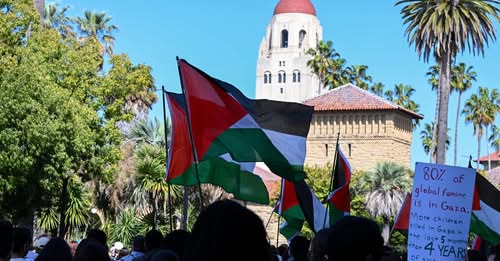
In a powerful act of resistance and advocacy, students from Stanford University disrupted a scheduled speech by the CEO of a company accused of complicity in genocide. Organized by Stanford Students for Justice in Palestine, the protest aimed to highlight ongoing concerns about corporate ethics and human rights violations linked to the company’s operations.
According to the group, their decision to deny the CEO’s speech was rooted in moral and ethical outrage. “Today, we denied the speech of a genocidal company’s CEO,” stated a spokesperson for the organization. “We stood up against complicity in violence and oppression, and chose to walk toward our People’s Commencement – a symbol of solidarity with marginalized communities and a call for a just future.”
The demonstration unfolded as students gathered outside the venue where the speech was to take place, chanting slogans advocating for accountability and human rights. The peaceful yet impactful walkout was complemented by speeches emphasizing the importance of standing against injustice, despite institutional pressures to maintain silence or complacency.
As students held banners and shared their visions of a more equitable world, many expressed hope that actions like these could inspire broader change within academic and corporate spheres. “We believe that education is not just about knowledge but also about activism and moral courage,” said one student organizer. “Our future depends on confronting injustice head-on, no matter how uncomfortable it may be.”
The protest gained significant attention on social media, where many lauded the students’ courage and commitment. Posts with hashtags like #WalkOutForJustice and #StanfordProtests rapidly circulated, rallying supporters and sparking conversations about corporate accountability and human rights worldwide.
This act of civil disobedience at Stanford reflects a growing movement among younger generations to challenge big business and advocate for ethical practices. As the world grapples with ongoing conflicts and human rights crises, students and activists are increasingly taking bold steps to make their voices heard in spaces traditionally reserved for dialogue and diplomacy.
While the company involved has yet to issue an official response, the protest underscores a broader call for ethical responsibility in global business. Stanford students’ actions remind us that educational communities are vital platforms for activism and that moral convictions can indeed shape the future.